

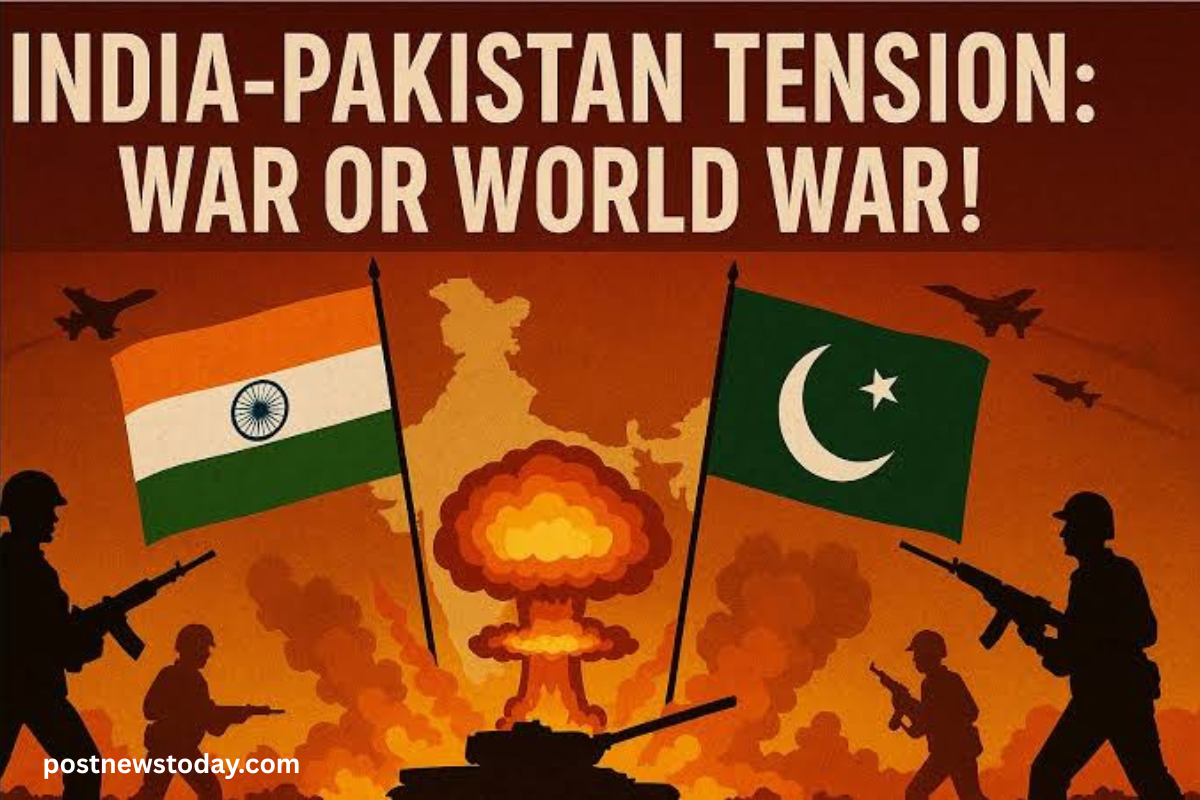
The India-Pakistan conflict is one of the most enduring and complex geopolitical rivalries in modern history. Since the partition of British India in 1947, the two South Asian neighbors have been entangled in a series of conflicts, both conventional and covert, that have left deep scars on the region’s political, economic, and social fabric. This article explores the historical, political, religious, and strategic roots of the India-Pakistan tensions, providing a comprehensive overview of the factors that continue to fuel animosity and instability between these nuclear-armed states.
Historical Context of Partition
The seeds of the India-Pakistan conflict were sown in 1947 with the partition of British India into two dominions: India and Pakistan. The partition, based on religious lines, led to one of the largest mass migrations in human history, with an estimated 10–15 million people crossing borders to join their chosen nation. The resulting communal violence caused the deaths of hundreds of thousands and created lasting animosities.
Pakistan was conceived as a homeland for Muslims, while India chose a secular model, despite its Hindu majority. The division was hastily executed, with significant administrative and logistical lapses. Border demarcations by the Radcliffe Line led to disputes, especially in princely states like Jammu and Kashmir, where the majority-Muslim population was ruled by a Hindu Maharaja.
The Kashmir Dispute
The most significant and enduring flashpoint between India and Pakistan is the dispute over Jammu and Kashmir. In 1947, the Maharaja of Kashmir acceded to India under duress following a tribal invasion from Pakistan’s side. This led to the First Indo-Pak War (1947–48) and the eventual establishment of the Line of Control (LoC), dividing Kashmir between the two countries.
The United Nations intervened in 1949, calling for a plebiscite to determine the future of Kashmir. However, the plebiscite was never held, with India insisting on the legality of the Maharaja’s accession and Pakistan demanding fulfillment of the plebiscite promise.
Subsequent wars in 1965 and 1971 further entrenched positions. The 1971 war, while primarily about East Pakistan (now Bangladesh), exacerbated tensions. The 1999 Kargil conflict, initiated by Pakistani soldiers and militants infiltrating Indian territory, brought the two nations dangerously close to a full-scale war.
Religious and Ideological Divide
The conflict is deeply rooted in religious identity. The very basis of Pakistan’s creation was religious, aimed at safeguarding Muslim interests. India, by contrast, has maintained a secular constitution, although the rise of Hindu nationalism in recent decades has challenged this ideal.
Religious tensions often flare into violence within both countries, affecting bilateral relations. Anti-Muslim riots in India or attacks on Hindus in Pakistan tend to reverberate across borders, fueling cycles of blame and retaliation. These underlying ideological differences contribute to a fundamental mistrust that colors diplomatic and military engagements.
Cross-Border Terrorism
One of the most contentious issues is cross-border terrorism. India accuses Pakistan of harboring and supporting terrorist groups like Lashkar-e-Taiba and Jaish-e-Mohammed, which have been responsible for major attacks, including the 2001 Indian Parliament attack and the 2008 Mumbai attacks.
Pakistan, while denying official involvement, has faced international pressure to crack down on these groups. However, the military establishment, particularly the Inter-Services Intelligence (ISI), is believed to maintain links with certain militant groups as a strategic tool against India, especially in Kashmir. This has further complicated peace efforts and trust-building measures.
Nuclear Deterrence and Strategic Stability
Both nations conducted nuclear tests in 1998, formalizing a nuclear deterrent framework that has arguably prevented large-scale wars since then. However, the presence of nuclear weapons has not eliminated the risk of conflict. Instead, it has led to a doctrine of “limited war under a nuclear umbrella,” increasing the potential for dangerous escalations.
Doctrines such as India’s “Cold Start” and Pakistan’s development of tactical nuclear weapons reflect a willingness to explore limited military options. This creates a volatile environment where miscalculation or provocation could spiral into a catastrophic confrontation.
Diplomatic Efforts and Setbacks
Over the years, various peace initiatives have been undertaken, including the Tashkent Agreement (1966), the Simla Agreement (1972), the Agra Summit (2001), and back-channel diplomacy. Confidence-building measures like people-to-people exchanges, trade agreements, and transportation links have shown promise but often falter following terrorist incidents or political changes.
The Composite Dialogue Process and Track II diplomacy efforts have also aimed to keep communication channels open. However, mistrust, domestic politics, and military influence in Pakistan have repeatedly derailed progress.
Impact on Regional and Global Politics
The India-Pakistan conflict has significant implications beyond their borders. It affects regional cooperation initiatives like SAARC, hampers economic integration in South Asia, and diverts resources from development to defense.
Major powers like the United States, China, and Russia maintain a strategic interest in the conflict. The U.S. has historically balanced relations with both countries but leans towards India in recent years due to economic and strategic considerations. China, a close ally of Pakistan, adds a further layer of complexity, especially with its investments in the China-Pakistan Economic Corridor (CPEC).
The Role of Media and Public Opinion
Media in both countries play a dual role: informing the public and inflaming passions. Nationalistic rhetoric, sensationalism, and biased reporting often exacerbate tensions. Public opinion, shaped by decades of hostility and propaganda, remains largely hostile, making it politically risky for leaders to pursue reconciliation.
Social media has further complicated the landscape, allowing misinformation and hate speech to spread rapidly. While civil society initiatives exist to promote peace, their impact is limited by overwhelming nationalist narratives.
Humanitarian and Economic Costs
The conflict has taken a tremendous toll on both countries. Military spending consumes significant portions of national budgets, diverting funds from education, healthcare, and infrastructure. Border regions suffer from underdevelopment, displacement, and frequent violence.
The people of Kashmir have borne the brunt of the conflict, living under heavy militarization and often deprived of basic rights. Economic opportunities in the region remain stunted, and generations have grown up in an environment of fear and uncertainty.
Pathways to Peace
While the road to lasting peace is fraught with challenges, several pathways could offer hope:
- Strengthening democratic institutions and civilian control over military policy, particularly in Pakistan.
- Encouraging bilateral trade and economic cooperation, creating interdependencies that disincentivize conflict.
- Reviving and sustaining dialogue through official and unofficial channels.
- Promoting educational and cultural exchanges to break down stereotypes and foster mutual understanding.
- Engaging international stakeholders to mediate and support peace initiatives without imposing external agendas.
Frequently Asked Question
Why did India and Pakistan become separate countries?
India and Pakistan were partitioned in 1947 due to religious and political differences. Pakistan was created as a homeland for Muslims, while India opted for a secular democracy with a Hindu-majority population.
What is the main cause of conflict between India and Pakistan?
The primary cause is the territorial dispute over Jammu and Kashmir. Both countries claim the region in full but control different parts of it.
Has there ever been a plebiscite in Kashmir?
No, although the United Nations recommended a plebiscite in 1949, it was never held. India maintains that Kashmir legally acceded to it, while Pakistan insists on implementing the plebiscite.
How many wars have India and Pakistan fought?
India and Pakistan have fought several major conflicts: in 1947–48, 1965, 1971, and the Kargil conflict in 1999.
Why is Kashmir so important to both India and Pakistan?
Kashmir has strategic, cultural, and symbolic significance. For Pakistan, it’s a Muslim-majority region that aligns with its founding ideology. For India, it’s an integral part of its secular, multi-religious nation.
Conclusion
The India-Pakistan conflict is a complex tapestry woven from history, religion, politics, and strategic interests. While deeply entrenched, it is not intractable. A sustained commitment to dialogue, backed by tangible actions and mutual respect, could eventually transform one of the world’s most dangerous rivalries into a relationship marked by cooperation and coexistence.

1 Comment
I read this post completely on the topic of the comparison of latest and previous technologies, it’s amazing article.