

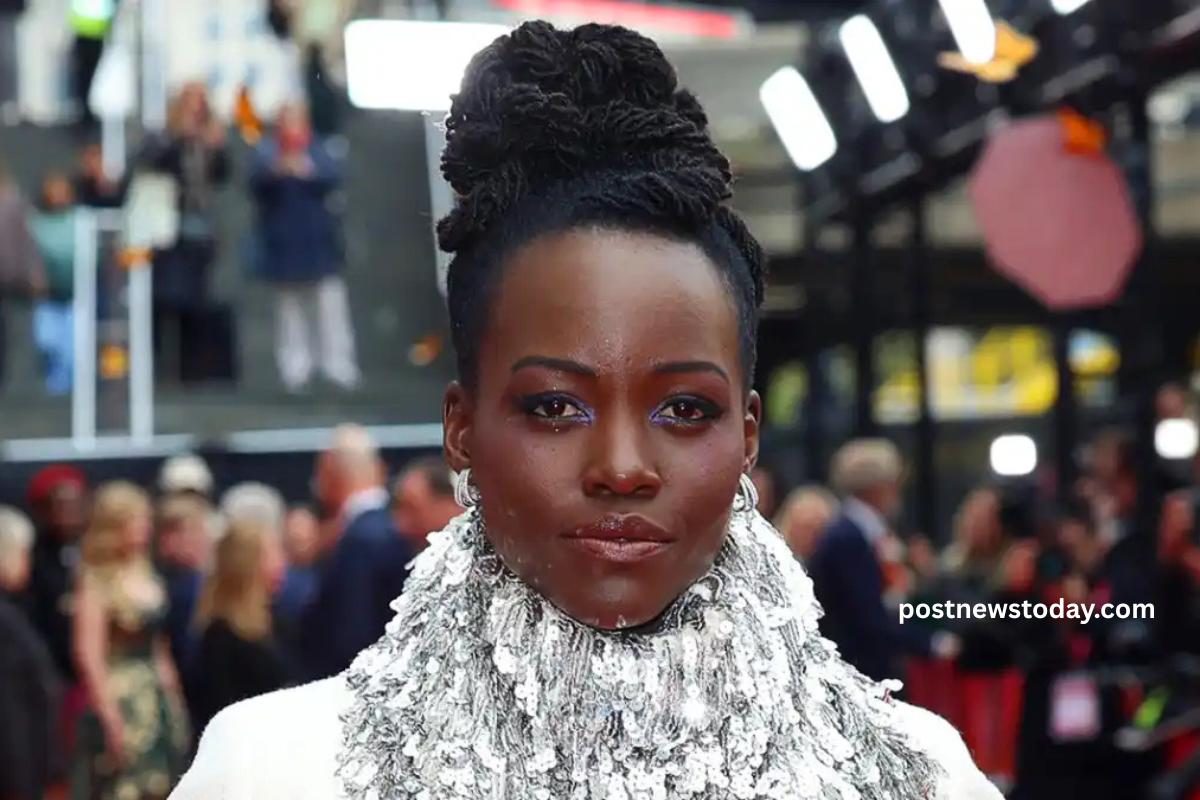
Lupita Nyong’o, the Oscar-winning actress, has always been a symbol of grace, talent, and resilience. Known for her remarkable performances in films such as 12 Years a Slave and Black Panther, Nyong’o’s journey to international stardom has been far from conventional. One of the most personal challenges she has faced throughout her career is navigating the complexities of identity, particularly when it comes to language and accent. Nyong’o, who was born in Mexico to Kenyan parents, grew up in Kenya and spoke Swahili and Luo, her mother tongue, before moving to the United States to pursue her acting career.
Her struggle with losing her Kenyan accent is something she has been open about, revealing how it affected her emotionally and psychologically, especially in the early stages of her career. In this article, we will delve into Lupita’s experience, her relationship with her roots, and how her accent, or the loss of it, played a pivotal role in her development as an actress and as an individual.
Background: Lupita’s Kenyan Roots and Early Life
Lupita Nyong’o was born in Mexico City in 1983 to Kenyan parents, but she grew up in Nairobi, Kenya. As a child, she was fluent in both English and Swahili and was immersed in Kenyan culture. Her early experiences in Nairobi shaped her understanding of identity, language, and culture.
Her Kenyan heritage, including her mother tongue of Luo, was central to her identity as a young girl. She was raised in a bilingual and bicultural environment, which would later influence her acting career. But the transition to the U.S. at the age of 19 to attend the prestigious Yale School of Drama introduced her to a new world of accents, dialects, and expectations.
Nyong’o’s experience growing up in Kenya gave her a deep appreciation for the diversity of languages and cultures within the country. However, as she sought to build her career in Hollywood, the idea of “sounding American” began to take hold of her. The pressure to conform to Western standards of speech became a daunting obstacle in her early years in the industry.
The Struggle: Losing the Kenyan Accent
Lupita has openly shared how she spent years trying to shed her Kenyan accent, especially during her early years in the United States. She recounted feeling ashamed of her accent and trying to fit into American society by adopting what she believed to be a more acceptable, neutral accent. This pressure was especially prevalent in her academic environment at Yale, where most of her classmates had either neutral American or British accents.
In interviews, Lupita has admitted that she spent several nights crying herself to sleep over the emotional toll of losing her accent. Her connection to her Kenyan identity felt threatened by the decision to suppress her natural way of speaking. This internal conflict reflected a deeper struggle with her sense of self-worth and belonging in the entertainment industry, where the pressure to conform to specific beauty standards and ways of speaking can be overwhelming.
The idea that success in Hollywood requires altering aspects of one’s identity was something Lupita had to grapple with. The decision to distance herself from her roots was not just about the accent, but about an overarching desire to be accepted in a world that often does not embrace diversity in its truest sense.
The Emotional Toll: Identity Crisis and Cultural Dissonance
Lupita’s personal journey through the struggle with her Kenyan accent reveals how deeply intertwined language and identity are. Her story mirrors the experience of many immigrants who feel pressured to abandon aspects of their culture in order to assimilate into a new environment. The emotional toll of this conflict is often profound and can lead to a sense of cultural dissonance, where individuals feel torn between their heritage and the desire to fit in.
For Lupita, losing her accent was not merely a cosmetic change—it represented a disconnect from the culture and people who shaped her. The actress spoke about how she initially felt like a “different person” when she attempted to speak without her accent. The psychological strain of trying to adopt a different identity was emotionally exhausting, and she described it as a kind of disorientation.
The Turning Point: Embracing Her Authentic Self
Lupita’s breakthrough role in 12 Years a Slave marked a turning point in her career and her relationship with her accent. During the casting process for the film, director Steve McQueen had made it clear that he wanted an actress who could speak in a way that was authentic to the character. McQueen’s insistence on raw authenticity allowed Lupita to stop trying to mask her identity, embracing the natural rhythm of her speech once more.
The experience of playing Patsey in 12 Years a Slave also contributed to Lupita’s decision to accept her Kenyan accent. McQueen’s commitment to casting individuals who could truly embody their characters in both voice and presence made Lupita realize that authenticity was far more important than conforming to an imposed standard of speech. The acceptance she found from McQueen and others in the industry emboldened her to embrace the unique sound of her voice.
This was a pivotal moment in Lupita’s personal and professional growth. It was a moment of liberation—when she no longer felt the need to deny her heritage or silence her accent. Embracing her Kenyan accent allowed her to be more truthful in her acting and to truly embody her roles without the emotional baggage of self-consciousness.
Cultural Reclamation: The Power of Language and Identity
In many ways, Lupita’s acceptance of her Kenyan accent was also a form of cultural reclamation. Language, as she has often pointed out, is more than just a way of communicating—it’s a vessel for preserving one’s culture, values, and history. By reclaiming her accent, Lupita was reaffirming her connection to her heritage, and in doing so, she was taking a stand against the normalization of cultural erasure in the entertainment industry.
Lupita’s story is a reminder that accents are not mere quirks of pronunciation but rather markers of identity and belonging. They are a product of one’s upbringing, community, and culture. Losing or altering one’s accent can feel like losing a part of oneself, especially when it is done under the weight of societal pressures. Lupita’s journey toward embracing her authentic self serves as a powerful example of the importance of honoring one’s roots, even in an industry that often prizes conformity over diversity.
The Impact on Her Career: Challenging Hollywood Norms
Lupita’s openness about her struggle with her accent is also a broader commentary on the entertainment industry. Hollywood, like many industries, has a long history of marginalizing non-American and non-Western voices. This cultural hegemony has created a space where actors who do not conform to Western ideals of beauty, speech, and behavior are often overlooked or required to change who they are to succeed.
By refusing to hide her Kenyan accent, Lupita has played a significant role in reshaping Hollywood’s view on diversity. Her success shows that one does not need to lose their cultural identity to succeed in the industry. Instead, embracing one’s heritage—accent, language, and all—can be a source of strength and authenticity that resonates with audiences across the globe.
Lupita’s refusal to compromise on her identity has opened doors for other actors who may have felt that their accents or cultural backgrounds were barriers to success. It is now more widely acknowledged that diversity in accents, languages, and cultural expression should be celebrated, not minimized.
Frequently Asked Question
Why did Lupita Nyong’o feel the need to lose her Kenyan accent?
Lupita Nyong’o felt the pressure to lose her Kenyan accent when she moved to the United States to pursue her acting career. In Hollywood, she believed that speaking with an American or neutral accent would make her more employable and help her fit in. This internalized belief, compounded by the desire to assimilate into American society and academia, led her to suppress her natural accent.
How did Lupita Nyong’o feel emotionally about losing her accent?
Lupita has openly shared that the process of losing her Kenyan accent was emotionally painful. She spent several nights crying herself to sleep as she struggled with her changing identity. Her accent was tied to her sense of self and connection to her Kenyan heritage, so suppressing it felt like a loss of a part of who she was.
What role did Yale University play in Lupita’s struggle with her accent?
At Yale School of Drama, Lupita was surrounded by peers who had American or British accents. This environment reinforced the pressure to conform to the typical American speech patterns, which she believed were necessary for success in the entertainment industry. The academic setting influenced her decision to change her accent, as she sought to blend in with her peers.
When did Lupita Nyong’o embrace her Kenyan accent?
Lupita’s breakthrough role in 12 Years a Slave was a turning point in her relationship with her accent. Director Steve McQueen encouraged her to be authentic, which led her to reconnect with her natural way of speaking. This experience allowed Lupita to stop hiding her accent and embrace her true self, ultimately giving her a sense of freedom and empowerment.
How did Lupita Nyong’o’s Kenyan accent impact her acting career?
Initially, Lupita believed that her accent might hinder her chances in Hollywood, but embracing her accent became an essential part of her acting career. She learned that authenticity, including her accent, was a strength rather than a weakness. Her natural accent helped her bring more depth and uniqueness to her roles, allowing her to stand out in a competitive industry.
Does Lupita Nyong’o believe accents are important?
Yes, Lupita believes accents are a significant part of one’s identity and cultural heritage. She has spoken about how accents are not just about pronunciation but also reflect one’s background, community, and personal story. Embracing her Kenyan accent was a form of cultural reclamation and a way of honoring her roots.
What message does Lupita Nyong’o’s story send to others?
Lupita’s story sends a powerful message about the importance of self-acceptance and embracing one’s heritage. It encourages people to stay true to who they are, despite external pressures to conform. Her journey shows that success doesn’t require losing one’s identity, and that diversity—whether in accents, languages, or backgrounds—should be celebrated.
How has Lupita Nyong’o’s story influenced the entertainment industry?
Lupita’s willingness to embrace her authentic self, including her Kenyan accent, has inspired others in the entertainment industry to do the same. It has helped to challenge the norms in Hollywood, encouraging more diverse portrayals of characters with different accents, backgrounds, and cultures. Her success proves that an accent is not an obstacle but a unique strength that adds to the richness of storytelling.
Conclusion
Lupita Nyong’o’s journey with her accent is a testament to the resilience of the human spirit. It shows that identity, language, and culture are deeply personal, and they play a vital role in shaping how we navigate the world. Her openness about her struggle with losing her Kenyan accent offers insight into the complexities of assimilation, self-acceptance, and the emotional toll that comes with trying to fit into societal molds.
