

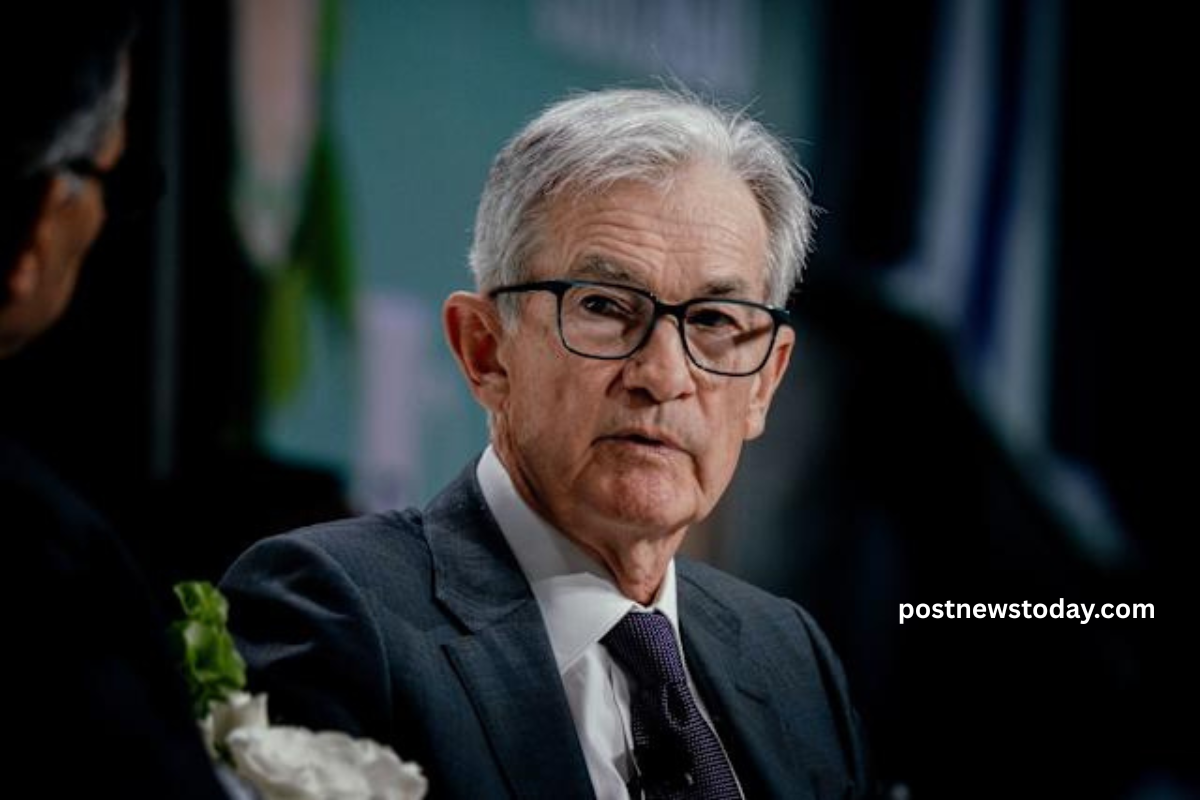
In recent weeks, Federal Reserve Chairman Jerome Powell has firmly placed a damper on bond traders’ expectations of a swift interest rate cut. For traders who had been cautiously optimistic that the central bank would take steps to ease monetary policy in response to softening economic data, Powell’s rhetoric delivered a sharp reminder that the Fed’s primary focus remains on controlling inflation.
In this article, we’ll examine Powell’s tough talk, the broader economic context, and the impact of his remarks on the bond markets, where traders are left recalibrating their strategies amidst growing uncertainty.
The Federal Reserve’s Role and Interest Rate Adjustments
The Federal Reserve plays a central role in shaping the economy, particularly through its management of interest rates. By raising or lowering rates, the Fed influences borrowing costs, inflation, and economic growth. When inflation is too high, the Fed often raises rates to cool down the economy. Conversely, in times of economic weakness, the Fed might lower rates to stimulate activity.
Bond markets, which are sensitive to changes in interest rate expectations, tend to react strongly to signals from the Federal Reserve. Typically, bond traders bet on rate cuts when they believe the economy is slowing down or when inflationary pressures are seen to ease.
Powell’s Leadership and Fed Communication
Jerome Powell, who has been at the helm of the Federal Reserve since 2018, has navigated a turbulent economic landscape, including the pandemic-induced recession and the subsequent recovery. Under Powell’s leadership, the Fed’s communications have become a crucial tool in managing market expectations. Every speech and statement from the Chairman is scrutinized, as they often provide insights into the Fed’s future actions.
Powell’s rhetoric is generally measured, but his recent comments have indicated a firm stance on combating inflation. This contrasts with the earlier optimism in the bond market, where traders had hoped that the Fed’s rate hikes of the past years would eventually make way for cuts.
The Current Economic Environment
The economic context in which Powell made his recent remarks is critical in understanding the Fed’s policy approach. Inflation, which spiked dramatically after the pandemic, has shown signs of cooling but remains above the Fed’s 2% target. At the same time, the labor market has been robust, and GDP growth has been steady, creating a scenario where the Fed faces a delicate balancing act.
While some weaker economic indicators have raised concerns about a potential recession, the economy has not yet shown signs of an imminent slowdown. This has given Powell reason to stay the course on monetary tightening rather than loosening policy prematurely.
The Bond Market Reaction to Powell’s Remarks
Bond markets, which had initially priced in the possibility of rate cuts later in the year, have been forced to reassess their positions following Powell’s statements. When Powell warned that inflation was still too high and that the Fed was committed to raising rates until price pressures were brought under control, traders quickly adjusted their forecasts. As a result, bond yields have risen, signaling that traders now anticipate rates will remain elevated for longer than initially expected.
The sharp rise in bond yields reflects a market that is no longer betting on imminent rate cuts. Instead, investors are recalibrating their expectations for the economy and the Fed’s actions. This has led to a flattening of the yield curve, a situation where short-term rates are near or higher than long-term rates, which typically signals that investors expect slower growth in the future.
Dissecting Powell’s Tough Talk
In his recent speeches, Powell emphasized that the Fed’s priority remains the battle against inflation. While acknowledging the economic uncertainties, he made it clear that the Fed was not prepared to relax its stance too soon. Powell’s tough talk suggested that despite signs of a cooling economy, inflationary pressures remain too strong to justify cutting rates in the near future.
Powell’s remarks were a sharp departure from the hopes of some market participants, who believed that the Fed would ease up on tightening as economic conditions moderated. However, Powell’s emphasis on long-term price stability made it clear that inflation control would continue to take precedence.
The Fed’s Stance on Rate Cuts
Powell and other Fed officials have repeatedly stated that rate cuts would only come once inflation is sustainably back under control. The current inflation rate, although lower than its peak in 2022, is still elevated by historical standards. Powell’s comments suggest that the Fed’s commitment to reducing inflation to its 2% target remains steadfast, which may require a prolonged period of high interest rates.
While the bond market had hoped that the Fed would shift towards a more dovish stance in response to slowing economic growth, Powell’s tough talk underscores that the Fed views inflation as the more pressing concern. His remarks suggest that traders should not expect quick relief in the form of rate cuts.
Bond Traders and Market Sentiment
Bond traders, who thrive on anticipating future interest rate movements, now find themselves recalibrating their expectations. For months, many had positioned themselves for a rate cut cycle in the second half of 2025, believing that inflation would continue to ease and that the Fed would be forced to pivot in response to weaker growth. However, Powell’s insistence on staying the course has forced traders to reassess.
The yield curve has flattened in recent days, reflecting heightened uncertainty about future rate cuts. A flattening yield curve often signals that bond traders expect economic growth to slow in the future, but with the Fed remaining resolute in its fight against inflation, rate cuts might not be on the horizon.
The Long-Term Outlook: What Traders Can Expect
Looking ahead, traders will likely continue to monitor economic indicators closely, searching for signs that inflation is moving closer to the Fed’s target. The bond market, having adjusted to Powell’s rhetoric, will be keenly attuned to any shifts in the Fed’s messaging. If economic data shows that inflation is under control without harming growth, the market could shift back towards anticipating rate cuts.
In the meantime, traders will need to adapt their strategies, hedging against the possibility that rates will remain higher for longer than expected. With inflation still a major concern, the bond market is likely to remain volatile, and traders will have to stay nimble to adjust to the shifting landscape.
Frequently Asked Question
What did Jerome Powell’s recent statements mean for bond traders?
Powell’s comments made it clear that the Fed is focused on controlling inflation, dashing bond traders’ hopes of rate cuts soon. Traders have adjusted their expectations, with bond yields rising as a result.
Why did bond traders expect rate cuts, and why are those expectations now changing?
Traders initially hoped for rate cuts due to slowing economic growth and easing inflation, but Powell’s firm stance on controlling inflation has led to a shift in expectations, with cuts no longer anticipated soon.
How does the Federal Reserve’s interest rate policy affect bond markets?
Fed interest rate changes impact bond yields directly. Rate hikes push yields higher, while rate cuts generally lead to lower yields. Bond markets adjust quickly to these signals from the Fed.
What is the yield curve, and how is it related to Powell’s statements?
The yield curve shows the difference in interest rates for bonds of different maturities. Powell’s comments on maintaining higher rates have caused the curve to flatten, signaling expectations of prolonged high rates.
What does a flattening yield curve signal for the economy?
A flattening yield curve suggests uncertainty about the economy, with expectations that the Fed will keep rates high for longer, possibly slowing economic growth.
How does Powell’s approach to inflation affect the broader economy?
By prioritizing inflation control, Powell’s approach could slow economic growth, raise borrowing costs, and affect financial markets. However, reducing inflation is seen as necessary for long-term economic stability.
Why is Powell so focused on controlling inflation?
Inflation erodes purchasing power and can destabilize the economy. By controlling inflation, the Fed aims to maintain long-term economic stability and avoid negative impacts on consumers and businesses.
Will the Fed cut rates in the near future?
Powell’s recent statements suggest that the Fed will not cut rates soon, as inflation remains too high. Rate cuts are likely only when inflation is under control.
What should bond investors do in this uncertain environment?
Bond investors may want to focus on shorter-duration bonds to be less sensitive to rate changes and consider diversifying to manage risks in a volatile environment.
How long will the Fed keep interest rates high?
The duration of high rates depends on inflation and economic data. Powell’s comments suggest that rates will stay elevated until inflation is firmly under control.
How can bond traders predict the Fed’s next move?
Bond traders analyze economic data, Fed speeches, and market expectations to gauge potential rate changes. Powell’s comments provide key insights into the Fed’s outlook.
What impact will Powell’s stance have on other financial markets?
Higher interest rates may affect stock valuations, particularly for growth stocks, and make bonds more attractive to investors. The broader economy could see slower growth and higher borrowing costs.
Conclusion
Jerome Powell’s recent tough talk has dimmed the hopes of bond traders looking for an immediate rate-cut cycle. His firm stance on inflation, despite signs of economic cooling, highlights the Fed’s commitment to achieving price stability at all costs. For now, bond traders must adjust their expectations, as Powell’s remarks suggest that interest rates may remain higher for a longer period. The uncertainty surrounding future rate cuts underscores the delicate balancing act the Fed faces in navigating the post-pandemic economy.
