

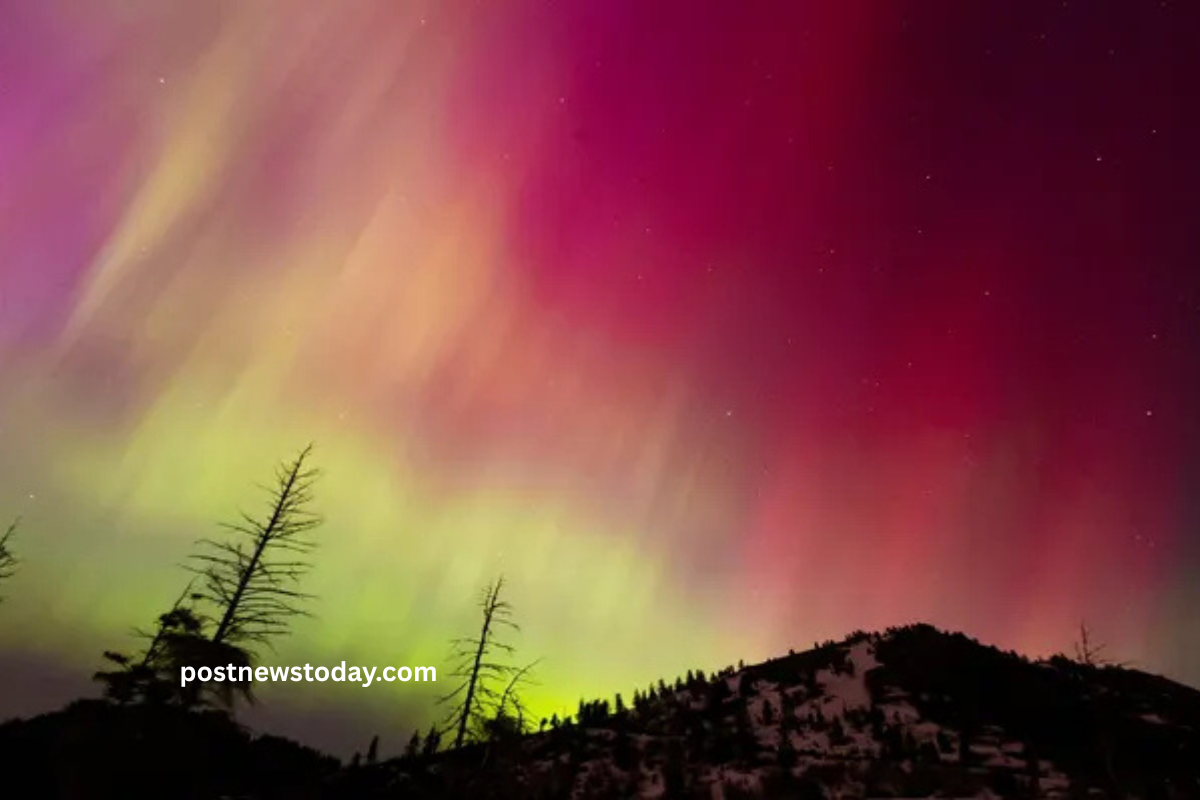
The Northern Lights, or Aurora Borealis, have fascinated people for centuries. These shimmering curtains of green, purple, and sometimes red light dance across the night sky, creating one of nature’s most spectacular light shows. Tonight, a rare and exciting aurora event is expected, with forecasts indicating that residents in several states across the U.S. may witness the magical phenomenon. This article explores the science behind the Northern Lights, how to best view them, and detailed insights into the states where the aurora is likely to be visible.
What Are the Northern Lights?
The Northern Lights, scientifically known as Aurora Borealis, occur when charged particles emitted by the sun collide with atoms in Earth’s atmosphere. These collisions excite the atoms, causing them to emit light. The colors we see depend on the type of gas and altitude of the collisions: oxygen produces green and sometimes red light, while nitrogen can cause purples and blues. This natural light display typically occurs near the magnetic poles, which is why the far northern regions are the most frequent viewing spots.
Why Do Northern Lights Occur? The Science Behind the Spectacle
The sun continuously emits a stream of charged particles known as the solar wind. During periods of increased solar activity—such as solar flares and coronal mass ejections (CMEs)—a surge of these particles speeds toward Earth. When they reach our planet’s magnetic field, some particles are funneled toward the poles, where they interact with atmospheric gases and produce light. This process explains why auroras are generally seen in higher latitudes but can sometimes be visible much farther south during intense geomagnetic storms.
How Northern Lights Forecasts Work
Scientists use satellites and ground-based monitoring stations to track solar activity and the solar wind’s behavior. The NOAA Space Weather Prediction Center, for example, provides forecasts based on solar wind speed, density, and magnetic orientation. When conditions are right—usually during a geomagnetic storm—the forecast predicts the likelihood of auroras at various latitudes. These forecasts help aurora chasers and curious skywatchers prepare for optimal viewing nights.
Tonight’s Aurora Forecast: What to Expect
Tonight, space weather experts have identified a strong geomagnetic storm in progress, increasing the chances of seeing Northern Lights well into the mid-latitude U.S. In particular, several states have been highlighted where the aurora may be visible, depending on weather conditions and light pollution.
States Likely to See the Northern Lights Tonight
Minnesota, known for its northern location and clear, dark skies, is a prime spot for aurora viewing. Residents in the northern parts, especially near the Boundary Waters Canoe Area, have a good chance of catching the lights.
North Dakota offers wide-open skies and low light pollution, with rural areas likely to provide fantastic views of the aurora. The northern part of the state is especially favored.
Montana’s vast wilderness and high altitude make it an ideal location. Places like Glacier National Park could see vivid displays, weather permitting.
Northern Wisconsin, with its numerous lakes and forests, often experiences strong auroras. Areas away from city lights provide the best viewing.
The Upper Peninsula and northern parts of Michigan’s Lower Peninsula frequently see auroras during geomagnetic storms. Clear nights here often provide stunning light shows.
Northern Idaho, particularly around Coeur d’Alene and Priest Lake, offers good chances to see the aurora thanks to its northern latitude and dark skies.
Wyoming’s wide-open skies and low population density make it another great state for aurora watching, especially in the northwest region.
Although farther south, Vermont’s high latitude and rural areas sometimes catch the aurora during strong storms. The Green Mountains could be a good vantage point.
Maine, with its northern coastline and forested interior, is well-positioned for aurora visibility. Clear, dark skies along the coast can reveal beautiful displays.
As expected, Alaska remains the best place in the U.S. to see the Northern Lights. Tonight’s storm will enhance the already frequent displays across the state.
Tips for Viewing the Northern Lights
Finding dark skies away from city lights or any bright lighting is essential. National parks and rural areas are best.
Checking the weather is important as clear skies are essential; clouds can block the view entirely.
Using aurora forecast apps can provide real-time updates on aurora activity.
Patience is key because the lights sometimes appear and disappear quickly, so staying outside and keeping watch helps.
Dressing warmly is recommended since nights can be chilly, especially in northern states during aurora season.
The Cultural and Historical Significance of the Northern Lights
For many indigenous peoples in North America and around the world, the Northern Lights have deep cultural and spiritual meanings. They have inspired myths, legends, and art. Understanding these perspectives adds richness to the experience of witnessing the aurora.
Frequently Asked Questions
What causes the Northern Lights?
The Northern Lights are caused by charged particles from the sun colliding with gases in Earth’s atmosphere. These collisions excite the gases, producing colorful light displays, primarily near the magnetic poles.
Why do the Northern Lights mostly appear in northern regions?
Earth’s magnetic field directs charged solar particles toward the poles. This concentration near the poles causes the auroras to be most visible in high latitude areas close to the Arctic Circle.
Can the Northern Lights be seen in the United States?
Yes, while the best views are usually in Alaska and northern states, during strong geomagnetic storms, the Northern Lights can be seen farther south in states like Minnesota, Michigan, and even Vermont or Maine.
What time of night is best for viewing the Northern Lights?
The best time to see the aurora is generally between 10 PM and 2 AM local time when the sky is darkest and solar activity is high.
What affects the visibility of the Northern Lights?
Clear, dark skies free from light pollution are critical. Cloud cover, city lights, and moonlight can all reduce visibility.
How can I know if the Northern Lights will be visible tonight?
You can check aurora forecasts from sources like NOAA’s Space Weather Prediction Center or use aurora tracking apps that provide real-time updates.
Are the Northern Lights dangerous to see?
No, the Northern Lights are a natural light phenomenon and pose no harm to viewers.
What colors can the Northern Lights appear?
Common colors include green, pink, purple, and red. The colors depend on the type of gas particles and altitude where the collisions occur.
Is there a best season to see the Northern Lights?
Yes, the aurora is typically more visible in the fall and winter months due to longer nights and clearer skies.
How long do Northern Lights displays usually last?
The duration can vary from just a few minutes to several hours, depending on solar activity and atmospheric conditions.
Conclusion
Tonight’s geomagnetic storm presents an exciting opportunity for many across the U.S. to witness the Northern Lights, a stunning natural spectacle. Whether you live in one of the highlighted states or are planning a trip north, being prepared and informed will maximize your chances of seeing the aurora. So bundle up, find a dark spot, and keep your eyes on the northern horizon — the sky might just light up with nature’s own fireworks.
