

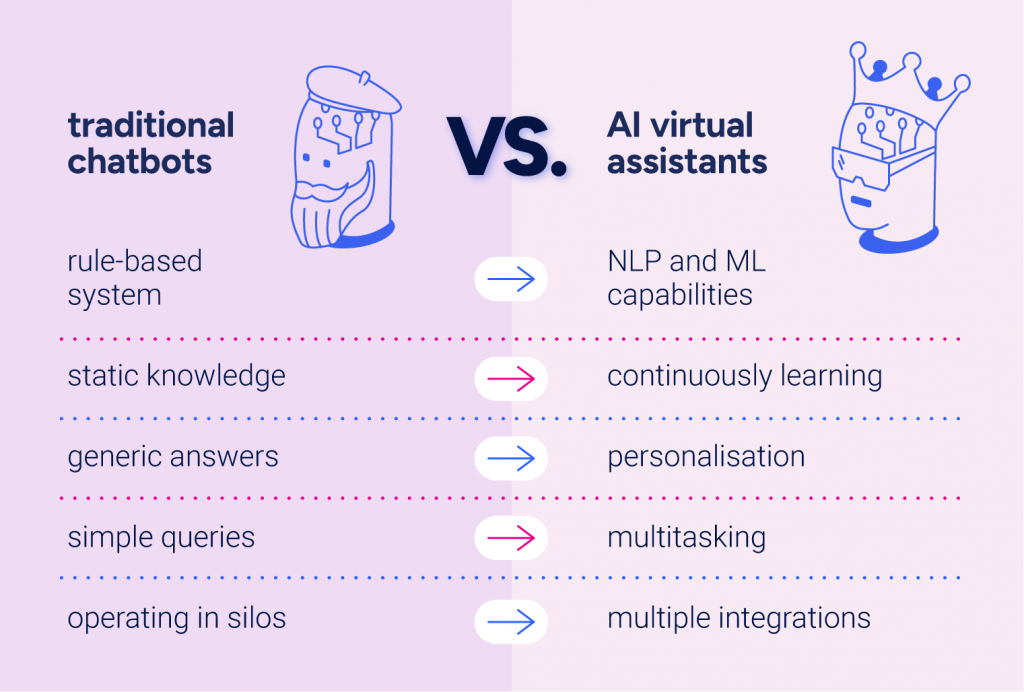
AI legal chatbots and human legal assistants represent two powerful forces in modern legal service delivery. Each contributes differently across speed, accuracy, cost, scalability, and judgment. Together, they are reshaping client communication, case workflows, and operational efficiency across firms. A modern Legal Software Development Company now builds hybrid systems that combine AI precision with human expertise.
The systems work with Clio, PracticePanther, and major CRM systems. They guarantee constant client interaction and high standards of compliance. This is a moderate solution that promotes scalable and accountable legal practices.
Human Legal Assistants Job
Human legal assistants are necessary even in a complex legal setting. They inject emotion, awareness of ethics and situational judgment into complicated issues. Their existence enhances confidence and confidence of the clientele in the long run. Whereas Legal AI Chatbot Development is more efficient, professional accountability is pegged on human capacity.
Core Responsibilities
The paralegals deal with the communication with clients, the preparation of documents, and the organization of a case on a daily basis. They organize court documents, discovery arrangements and schedules of attorneys. The monitoring of bills and the documentation of compliance are done professionally. They have well-organised support that facilitates a smooth transition among litigation and transactional issues.
Competencies and Knowledge Needed.
Legal assistants are in need of high research skills and knowledge of ethics. They have to be well informed of the state bar standards and procedure requirements. Precision in drafting and calendaring accuracy are also vital skills that are needed daily. Most of them are experts in any of the following areas: family law, intellectual property, or corporate transactions. Constant learning makes them more resolute in judgment and professional performance.
The drawbacks of Human-based Processes.
Workflows that occur in a fixed work schedule and availability are driven by humans. After hour calls usually go unresponded until the following working day. Full-time legal support teams incur labor expenses that are very high. Fatigue may lower the accuracy of data entry when there is a long discovery review. It is also a problem of knowledge silos that prevents scalability as the number of clients grows exponentially.
The AI Chatbots vs the Human Legal Assistants: The major differences.
AI and human workforce are fundamentally different in terms of operation design. One uses computational accuracy whereas the other uses the experiential judgment. Knowledge of these differences assists firms to formulate best hybrid strategies.
Speed and Availability
Artificial intelligence chatbots are fast and capable of working 24 hours a day and all year round. They handle thousands of inquiries made by clients at a time without delays. The human assistants are normally put on structured forty-hours weekly shifts. Workloads in the evening hours can lower the level of responsiveness and processing efficiency.
Accuracy and Consistency
AI transformer models provide the same response to the same legal queries. They allude to systematic precedent databases and no interpretational discretion exists. The human reactions can change with the work load and other contextual judgment. Manual data entry may be affected by fatigue in the course of the long review sessions.
Cost and Scalability
Conversations through chatbots have only a low incremental cost of a conversation. Organizations grow automatically to meet the large volumes of inquiries without recruiting. The cost of human staffing also goes in proportion to the expansion of workload. Expansion usually demands the hiring of more staff, education, and management.
Individualization and Compassion.
Machine learning can be used to create personalization of conversations based on past patterns of interactions. Nevertheless, true empathy and emotional support are the only human capabilities. Personal rapport is quite important among high-net-worth clients. The human assistants develop trust by using natural communication and listening.
Learning and Adaptability
AI systems keep being updated with regulatory and legal data. They automatically include new precedents and statutory revisions. Continuing education programs help human professionals to refresh their skills. Knowledge retention can reduce with time in the absence of reinforcement.
Comparison of Performance on Legal Tasks.
The resource allocation strategies are useful in various legal tasks. Task-specific analysis shows the areas where automation performs well and where a human review is very essential.
Client Intake and Screening
Thousands of leads are structured every month using AI chatbots. They use natural language processing to extract important facts in the free-text responses. There are not many inquiries that human coordinators receive on a daily basis because of time limitations. The response delays usually occur on weekend inquiries without automation.
Appointment Scheduling
Conversational AI is also connected to the Outlook and Google Workspace calendars. The presence of automated reminders leads to a considerable decrease of absent appointments and schedule conflicts. Human coordination can consist of duplicative back and forward communication. At times high-demand periods result in calendar overlap.
Legal Document Assistance
AI-based retrieval systems retrieve templates in real-time. Contracts fill up automatically with jurisdiction-clauses within minutes. The paralegal drafting takes a much longer period of time to prepare on a manual basis. Automation is standardized to enhance the consistency of clauses in repetitive documents.
Case Notifications and Case Updates.
The docket integrations are automated with real-time provision of status alerts to clients. Alerts are generated when an update is presented in the court. Developments during after hours will be missed in case of manual docket reviews. Transparency and confidence of the clients is improved through automated warnings.
Legal Research Support
The semantic search engines are used to analyze millions of judicial precedents at a fast rate. Doctrinal matching ranks relevant authorities within seconds. Associates waste hours researching complicated issues of motion practice. AI also speeds up initial research and lawyers authenticate ultimate approaches.
Perks of AI Legal Chatbots.
In the legal field, conversational AI offers quantifiable productivity in bulk legal work. Automation enhances coverage of compliance and continuity.
24/7 Operational Support
The AI platforms are available 24/7 throughout weekends and holidays. After hours calls have better chances of conversion with real time interaction. Constant assistance lowers revenue loss due to opportunity loss.
Lower Operational Costs
Automation eliminates the need to have high numbers of administrative staff. Transaction spikes are managed without an equivalent growth in hiring. During times of growth, firms have consistent operating costs.
Reduced Response Times
Bot responses in real time enhance the perception of clients tremendously. Quick response enhances the conversion levels of leads. Message alerts eliminate the chance of defaulting on compliance.
Scalable Client Handling
Thousands of parallel conversations can be handled by AI systems. Clients do not experience wait periods and scheduling delays. Scalability can be accomplished without straining on operations.
Human Legal Assistants Benefits.
Human experience is still required in numerous situations despite the development of automation.
Trust Building and Emotional Intelligence.
Genuine empathy makes the relationship with the patient strong in the long-run. Customers with sensitive issues may need some form of personal assurance. There is increased loyalty and referral potential when there is human interaction.
Complex Case Understanding
The unclear patterns of facts involve the need to reason and meditate ethically. Skilled assistants find out the details that are outside of the organized rule-based systems. In unpredictable cases, human supervision is still a necessary approach.
Moral Rationality and a sense of Responsibility.
Professional standards require responsibility that is based on bar rules. Legal frameworks of human assistants are supervisory. The AIs are not capable of taking formal ethical responsibility into their own hands.
Complex Negotiation Strategy.
Live negotiations have the advantage of reading tone, intent and cues. The flexibility of human beings enhances bargaining processes in issues that are of high value. Strategic persuasion needs situational awareness to go on with scripted logic.
AI Chatbot Legal Weaknesses.
AI technology has structural and ethical limitations as well.
Absence of Human Judgment
New legal cases decrease automated confidence dramatically. Grey areas of ethical nature need to be subject to human interpretation and responsibility. The judgment of courts requires professional skills rather than algorithmic ratings.
Reliance on Quality Data
Incomplete training data raises the risk of hallucinating and being biased. In legal applications of a mission critical nature, human validation still plays a crucial role. This is alleviated with the constant monitoring to help avoid negative publicity.
Ethical and Compliance Challenges
Unauthorized practice regulations restrict unsupervised legal automation. Regulatory frameworks require substantial human supervision in many jurisdictions. Noncompliance may expose firms to disciplinary risks.
Context Loss Across Sessions
Multi-session conversations may experience contextual drift over time. Human professionals maintain continuity across extended legal engagements. Long-term advisory relationships benefit from personal memory retention.
Why A3Logics Is the Right Partner for Legal AI Solutions?
A3Logics provides legal-specific conversational platforms of enterprise caliber. They apply Legal Databases and advanced transformer model services to their Legal AI Chatbot Development services. Platforms with large conversation volumes are extremely precise. Continuous integrations ensure a continuous flow of work within significant case management systems.
Scalability and compliance are the crucial elements of the Enterprise AI Chatbot Development approach that the company is pursuing. Routing is done in an intelligent way that has specialist escalation and is structured. Litigation and transactional practices are supported by context preservation.
Conclusion
AI chatbots in legal contexts are fast, scalable and accessible 24/7. Human legal assistants provide compassion, moral judgment and tactical reasoning. The two of them would create a strong hybrid legal service model.
A trusted Enterprise AI Chatbot Development Company can design integrated systems balancing automation and accountability. Strategic adoption improves productivity, client satisfaction, and revenue performance. Hybrid legal intelligence represents the future of sophisticated law practice management.

