

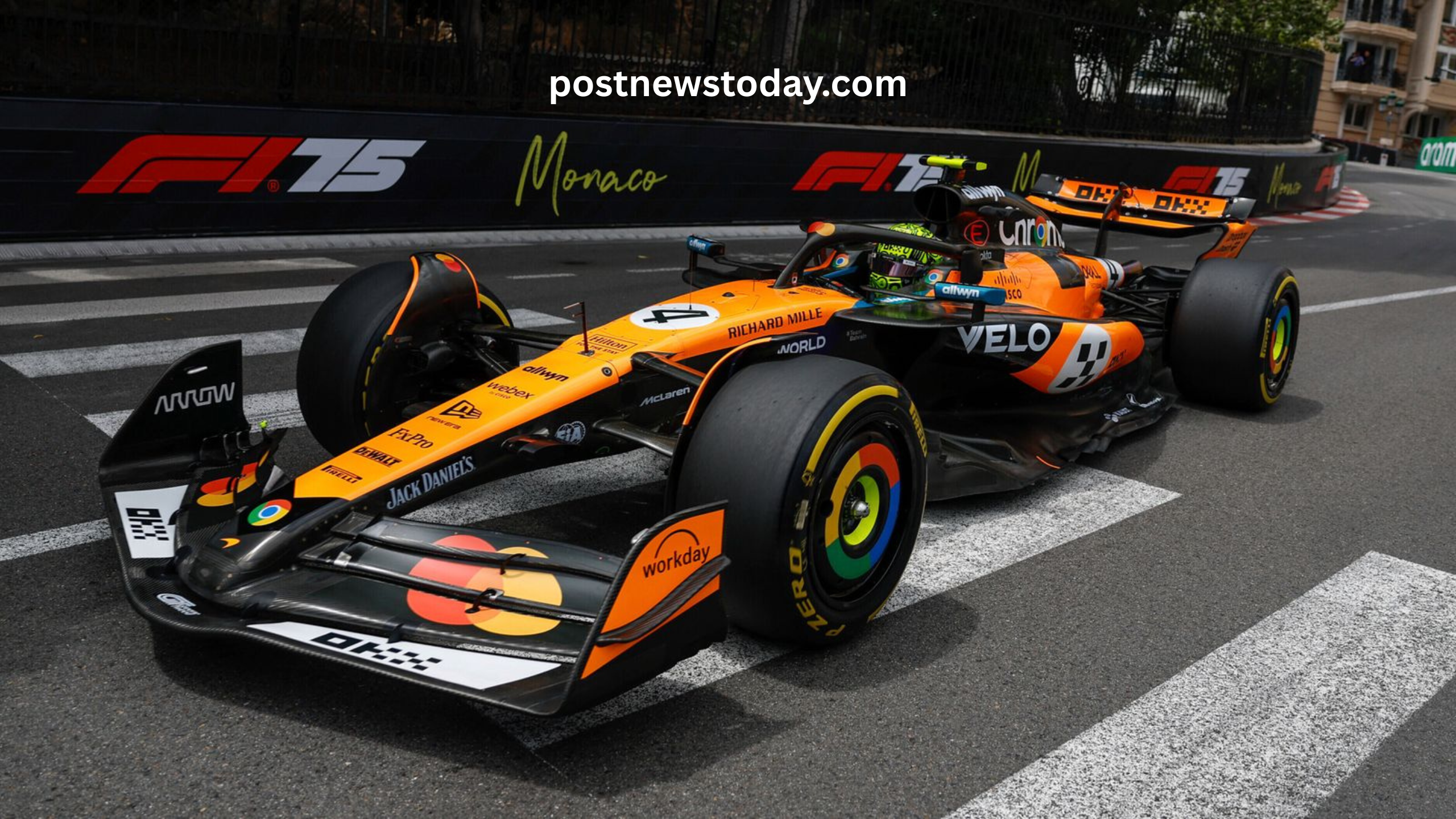
In a stunning and career-defining moment, Lando Norris has claimed pole position at the Monaco Grand Prix, outpacing Ferrari’s Charles Leclerc and a determined grid of top-tier Formula One drivers. This achievement marks not only a personal triumph for Norris but also a potential turning point for McLaren, who have worked tirelessly to return to the front of the pack.
However, amid the celebrations and high hopes, a new twist threatens to cast a shadow over Norris’s pole position. A recent update to the tyre change regulations could significantly affect race-day strategy, especially for those at the front of the grid. While Norris’s qualifying lap was met with cheers and optimism, the team now faces a strategic dilemma due to the revised rules that govern tyre changes and compound usage.
This article explores the implications of Norris’s performance, the history and complexity of the Monaco Grand Prix, and the new tyre regulations that could alter the race’s outcome in unexpected ways.
Lando Norris: A Rising Star
Lando Norris’s path to Formula One pole position at Monaco has been a journey of resilience, skill, and perseverance. Since joining McLaren, Norris has showcased flashes of brilliance, consistently delivering strong performances and earning a growing fan base. His progression through the junior ranks was marked by remarkable speed, precision, and a maturity beyond his years.
Despite being in a car that hasn’t always matched the pace of the front runners, Norris has earned his place among the elite. His ability to outperform his machinery, especially in changing conditions and on challenging circuits, has set him apart. Monaco, with its tight corners, unforgiving walls, and lack of overtaking opportunities, has long been a track that rewards driver skill over raw speed — a perfect arena for Norris to shine.
This year, Norris and McLaren arrived at the principality with a sense of quiet confidence. Upgrades to the car, a deeper understanding of the tyre windows, and Norris’s improved racecraft contributed to the belief that a strong qualifying result was possible. Yet few expected him to clinch pole position, especially against the likes of Leclerc and Verstappen.
The Magic of Monaco
The Monaco Grand Prix is often regarded as the jewel in the Formula One crown. The glitz and glamour of Monte Carlo, combined with the circuit’s legendary status, create an atmosphere unlike any other race on the calendar. The track snakes through the narrow streets of the city, challenging drivers with tight hairpins, rapid elevation changes, and almost no margin for error.
Winning in Monaco requires more than just a fast car. It demands flawless execution, mental toughness, and a deep understanding of the track’s rhythm. Overtaking is notoriously difficult, which makes qualifying crucial. Starting from pole position can often be the difference between victory and disappointment.
For Lando Norris, starting at the front of the grid is a monumental advantage. However, the strategic element introduced by the new tyre rules could disrupt the traditional script, where pole-sitters typically control the race from the front.
New Tyre Rule: What Changed
Formula One’s ever-evolving regulations are designed to enhance the spectacle, promote fairness, and ensure safety. Recently, the FIA introduced a new set of tyre regulations aimed at increasing strategic variance and preventing teams from relying too heavily on predictable one-stop races.
Under the revised rules, teams are now required to use at least two different dry tyre compounds during the race, with more stringent conditions around when tyres can be changed. This shift means that race strategy cannot simply revolve around securing track position and defending it at all costs. Instead, teams must now think more dynamically, adapting to changes in weather, safety cars, and competitor strategies.
These changes are particularly significant in Monaco. Given the track’s layout, drivers often aim to run as long as possible on one compound to maintain position. However, the new rules may force early pit stops or compel teams to switch to less optimal compounds, thereby shaking up the usual order.
For Norris, this could mean facing a direct challenge to his pole advantage. If the McLaren car does not manage tyre wear effectively, or if competitors behind him gamble on a different compound, the race could tilt away from him despite his starting position.
McLaren’s Strategic Dilemma
McLaren now finds itself at a strategic crossroads. The team must weigh the benefits of maintaining track position against the risks of losing performance due to tyre degradation. The new rules mean they cannot merely react to the actions of others; they must be proactive in building a strategy that keeps Norris in the lead without compromising long-term race performance.
Historically, McLaren has excelled at in-race decision-making, using data and simulations to guide pit stop timing and tyre selection. However, Monaco’s unique characteristics limit overtaking, meaning any loss of position in the pits could prove catastrophic.
The tyre rule twist could also embolden rival teams. Drivers starting just behind Norris may choose a more aggressive strategy, switching to a softer or harder compound early in the race to undercut him during pit stops. If McLaren is caught off-guard or forced into an unplanned tyre switch, Norris’s pole advantage may evaporate.
Charles Leclerc: The Hometown Challenger
While Norris captured the headlines with his pole, Charles Leclerc is not far behind. The Monegasque driver, who has endured a mixed history at his home Grand Prix, remains a formidable threat. His pace in qualifying was exceptional, and the Ferrari team has made significant strides in improving their tyre management this season.
Leclerc will be keenly aware of the strategic implications of the new tyre rules. With his familiarity with the track and strong recent performances, he may adopt a contrarian approach to gain the upper hand. The battle between Norris and Leclerc will not just be about raw speed; it will hinge on strategy, execution, and the ability to adapt to an evolving race landscape.
The Psychological Pressure of Leading
Leading a Formula One race is as much a mental challenge as a physical one. For Norris, this race represents one of the most important moments of his career. The pressure of starting from pole at Monaco — where mistakes are costly and the expectations sky-high — can weigh heavily on even the most experienced drivers.
Norris’s calm demeanor and sharp focus have earned him praise in the paddock, but he will need every ounce of composure to handle the tension of race day. The threat from Leclerc, Verstappen, and others will be constant, particularly if tyre degradation or pit stop strategy becomes an issue.
In past races, drivers who started from pole have made costly errors under pressure, especially if strategy didn’t go their way. For Norris, staying mentally sharp, communicating clearly with his engineers, and managing his tyres could be the key to converting pole into a historic victory.
Pit Wall Dynamics: Engineers in the Spotlight
While drivers often take the glory, Formula One is a team sport. Nowhere is this more evident than in races affected by complex tyre rules. The role of the pit wall, specifically the strategists and engineers, becomes crucial.
McLaren’s engineering team will be monitoring tyre temperatures, degradation rates, gap times, and weather data in real-time. With the new rules in play, every piece of data must be analyzed instantly to inform decisions that could make or break the race.
Pit stop timing will be critical. A second too early or too late could drop Norris into traffic or allow a rival to gain an advantage. Engineers must also be ready to adapt to unexpected variables such as a safety car, which often appears at Monaco due to the narrow track.
Weather and External Factors
Although the current forecast suggests dry conditions for race day, Monaco has a history of sudden weather changes. A brief shower or change in track temperature could drastically alter tyre performance and pit stop strategy.
If rain appears mid-race, teams will be forced to make difficult decisions quickly. The new tyre rules may become even more complicated if the switch to intermediate or wet tyres is required. Norris will need to be ready to adjust his driving style and trust the team’s calls without hesitation.
The Fans and the Future
Norris’s pole position has electrified fans and brought renewed excitement to the sport. Social media buzzed with praise for his lap, and pundits speculated about whether McLaren could finally return to the top step of the podium.
Beyond the race itself, Norris’s performance could have long-term implications for McLaren. A strong result in Monaco would bolster team morale, attract further sponsorship, and reaffirm the team’s development path. It could also signal a shift in the power balance within Formula One, challenging the dominance of Red Bull and Mercedes.
Frequently Asked Questions
What makes Lando Norris’s pole position at Monaco so significant?
Norris’s pole position is a major milestone in his career and a boost for McLaren, showing their progress and potential to compete with the top teams. Monaco’s challenging street circuit rewards driver skill, so securing pole here highlights Norris’s talent.
How do the new tyre regulations affect the Monaco race?
The updated rules require drivers to use two different dry tyre compounds during the race, which introduces more strategy complexity. This can disrupt traditional approaches where drivers try to maintain track position by minimizing pit stops.
Why is qualifying especially important at Monaco?
Monaco’s narrow and twisty layout makes overtaking extremely difficult, so starting at the front of the grid offers a significant advantage in controlling the race and increasing chances of victory.
What challenges does McLaren face with the new tyre rules?
McLaren must carefully balance track position with tyre management under the new rules. Strategic pit stops and timely tyre changes will be crucial to maintaining Norris’s lead and responding to rival strategies.
How might Charles Leclerc’s strategy impact the race?
Leclerc, racing at his home Grand Prix, is a strong contender who may adopt an aggressive tyre strategy to challenge Norris. His familiarity with the circuit and Ferrari’s improvements make him a key rival.
How important is mental toughness for Norris in this race?
Starting from pole at Monaco comes with high pressure. Norris will need to stay focused and manage the psychological demands of leading a high-stakes race, especially with strategic uncertainty and fierce competitors close behind.
What role do McLaren’s engineers play during the race?
The engineers are vital in analyzing real-time data about tyre wear, lap times, and race conditions. Their quick decisions on pit stops and strategy adjustments will greatly influence Norris’s chances of converting pole position into a race win.
Conclusion
Lando Norris’s pole position at the Monaco Grand Prix represents both a remarkable achievement and a new challenge. While his speed and skill earned him the top starting spot, the introduction of complex tyre regulations means the race will be unpredictable. Strategy and adaptability will be just as important as raw pace.
