

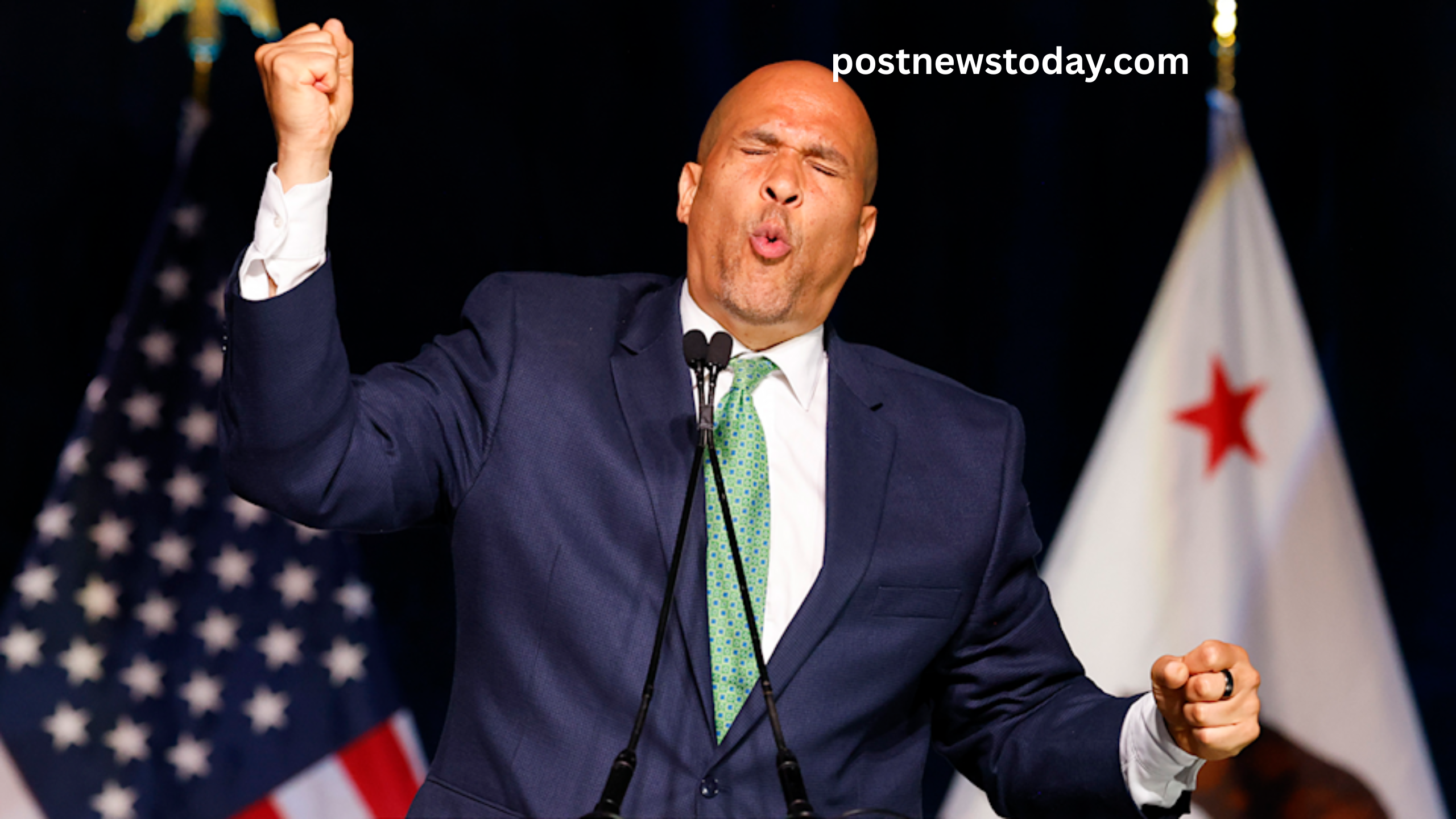
In a recent public statement that sparked widespread controversy and debate, Elon Musk, the billionaire entrepreneur and CEO of Tesla and SpaceX, alleged that Senator Cory Booker’s wave appeared to resemble a Nazi salute. This claim rapidly circulated on social media and ignited discussions across political and cultural spheres. The allegation raised important questions about the boundaries of public discourse, the responsibilities of influential figures, and the sensitivity required when referencing symbols associated with hate and violence.
This article explores the details surrounding this allegation, profiles the key figures involved, examines the cultural and historical context of the Nazi salute, and analyzes the broader political and social implications of such claims.
Background: Elon Musk and Cory Booker
Elon Musk is known for his dynamic presence both in business and on social media platforms. With a history of making provocative and often polarizing statements, Musk has cultivated an image as a disruptor not only in technology but also in public conversations.
Senator Cory Booker, on the other hand, is a prominent Democratic figure, known for his advocacy on civil rights, social justice, and community development. Throughout his political career, Booker has been involved in numerous initiatives aimed at bridging divides and promoting inclusivity.
The Incident: What Happened?
The incident in question centers around a brief moment captured during a public event where Senator Booker was seen waving to a crowd. Elon Musk commented that the manner of Booker’s wave resembled a Nazi salute, a highly inflammatory assertion given the historical weight of the gesture. Videos and images circulated showing Booker’s wave, which some described as an awkward or casual gesture, not indicative of any hateful symbolism.
The context of Musk’s allegation, including his platform and tone, intensified the reactions and prompted widespread scrutiny.
Understanding the Nazi Salute Allegation
The Nazi salute is a symbol closely tied to the atrocities committed by the Nazi regime during World War II. It is widely condemned and carries deep emotional and historical trauma for many communities around the world. Accusing someone of performing this salute is a serious allegation, often implying support for or association with hateful ideologies.
Given this gravity, such accusations demand careful consideration and substantial evidence. Misuse of this charge risks trivializing the historical suffering associated with the gesture and can inflame social tensions.
Political and Social Context
The allegation must be understood within the broader political and social climate. In recent years, political discourse has become increasingly polarized, with social media often serving as a battleground for conflicting ideologies and heated rhetoric. Both Musk and Booker occupy influential spaces within this climate, with Musk’s recent public stances drawing both support and criticism.
This environment can amplify misunderstandings and contribute to rapid spread of contentious statements without thorough verification.
Public Reaction and Media Coverage
Reactions to Musk’s claim were swift and varied. Supporters of Booker condemned the allegation as unfounded and damaging, while some Musk followers defended his right to express his opinion. Media outlets approached the story with differing editorial perspectives, some focusing on the sensational nature of the claim, others highlighting the need for responsible discourse.
Booker’s office issued a statement denying any such intent in the wave, emphasizing the importance of not weaponizing symbols of hate for political attacks.
Impact on Public Discourse
This episode underscores the challenges in maintaining respectful and fact-based political discourse. Allegations that invoke powerful symbols can escalate conflicts and contribute to misinformation. Influential public figures bear a responsibility to engage thoughtfully, recognizing the potential consequences of their words.
Frequently Asked Question
Who is Elon Musk?
Elon Musk is a billionaire entrepreneur known for leading companies like Tesla and SpaceX. He is also known for his active presence on social media where he often shares strong opinions.
Who is Cory Booker?
Cory Booker is a U.S. Senator from New Jersey and a member of the Democratic Party, known for his focus on civil rights, social justice, and community development.
What exactly did Elon Musk say about Cory Booker’s wave?
Elon Musk alleged that Senator Booker’s wave resembled a Nazi salute, a claim that generated significant controversy and debate.
Why is the Nazi salute a sensitive topic?
The Nazi salute is historically tied to the atrocities of Nazi Germany during World War II and is widely regarded as a symbol of hate, racism, and violence. Accusing someone of performing it is a serious and sensitive allegation.
Did Cory Booker respond to the allegation?
Yes, Cory Booker’s office denied any such intent behind the wave, stressing that the allegation was unfounded and inappropriate.
What was the public reaction to Elon Musk’s claim?
Reactions were mixed—critics condemned Musk’s allegation as damaging and baseless, while some supporters defended his right to voice his opinion.
Is there any evidence that Booker’s wave was a Nazi salute?
No credible evidence supports that Booker’s wave was intended as a Nazi salute. The gesture was generally interpreted as a casual wave to the crowd.
Why did this incident attract so much media attention?
The involvement of high-profile figures like Elon Musk and Cory Booker, combined with the serious nature of the allegation, fueled widespread media coverage and public discussion.
What are the broader implications of such accusations?
Accusations involving symbols of hate can escalate political tensions, contribute to misinformation, and highlight the importance of responsible communication by public figures.
Conclusion
Elon Musk’s allegation about Cory Booker’s wave highlights the complex interplay between politics, symbolism, and public communication. While public figures have the right to express opinions, accusations tied to historically significant and sensitive symbols require careful validation and consideration. Moving forward, fostering constructive dialogue remains essential to bridging divides and promoting understanding in an increasingly polarized world.
