Poker game rake represents a crucial concept every card enthusiast needs to comprehend fully. Mastering fee structures helps competitors protect their hard earned bankrolls efficiently over time. The GO88 platform offers transparent financial systems for all registered individuals.
What is poker game rake conceptually
Understanding poker game rake involves recognizing the small commission taken by card room operators. Establishments collect small percentages from active pots to maintain their ongoing business operations smoothly. Participating in GO88 card matches requires contributing to facility maintenance through these systematic deductions.
Recognizing hidden costs separates amateur competitors from highly profitable professional card enthusiasts consistently. Evaluating every expense alongside expected returns provides a more realistic picture of overall long-term profitability. Competitors must account for structural fees while calculating their expected long term financial returns. Even small recurring deductions can accumulate into significant financial impacts across thousands of completed hands. Ignoring these subtle deductions often leads to unexpected bankroll depletion during extended gaming sessions.

Basic conceptual overview regarding common card room fee structures
How establishments calculate the poker game rake effectively
Different venues employ varying methodologies when determining exact poker game rake amounts per hand. Understanding calculation mechanics empowers individuals to select highly profitable card tables wisely.
Cash game calculation method
Cash ring matches typically extract a fixed percentage directly from the final total accumulated pot. The exact percentage and maximum cap often vary according to stake levels and individual platform policies. Dealers remove chips systematically before pushing the remaining winning funds toward the victorious participating individual. Reviewing these fee structures in advance helps participants estimate their long-term operational costs with greater accuracy. Most venues implement strict poker game rake caps to prevent excessive deductions during massive clashes.
Tournament calculation method
Competitive tournament formats require upfront poker game rake fees rather than taking money from active pots. This fixed pricing structure eliminates uncertainty by clearly defining all participation costs before the event begins. Organizers separate the total buy in amount into prize pool contributions plus facility management costs. Understanding this distinction enables competitors to compare tournament value more accurately across different platforms and event formats. Such transparent structural designs allow competitors to calculate their exact financial commitments before registering formally.
Factors affecting fee levels
Several distinct variables influence the exact poker game rake rates applied across different virtual competitive environments. Tournament formats and cash game structures may also introduce different fee calculation methods depending on the platform’s operational policies. Playing stakes directly correlate with the percentage taken by platform operators during active daily matches. Table participant counts occasionally alter the collection limits to maintain fair economic ecosystems for everyone.
| Variable Factor | Impact On Fees | Typical Structural Adjustment |
| High blind stakes | Lower percentage caps | Fixed maximum deduction limits |
| Low blind stakes | Higher percentage rates | Frequent smaller chip deductions |

Specific variables influencing poker game rake calculation methods
Common fee collection models across digital tables
Platforms utilize distinct distribution formulas to allocate commission burdens among active participants fairly. Studying these collection models reveals which specific environments suit your personal strategic approach best.
Percentage method mechanics
The traditional proportional system takes a predefined fraction from every single active pot reaching the flop. Most platforms also establish a maximum rake cap to prevent deductions from increasing indefinitely as pot sizes grow larger. Most digital establishments apply a standard five percent deduction rate across their low stakes card rooms. Incorporating the poker game rake factor into your mathematical expectations remains crucial under this specific system.
Weighted contributed features
This modern allocation structure distributes the commission burden strictly based on individual financial pot contributions. As a result, the overall fee distribution more accurately reflects each participant’s level of involvement throughout the hand. Aggressive participants paying more chips into the center essentially generate higher poker game rake portions eventually. Highly conservative individuals benefit immensely from such systems by paying fewer structural costs during tight sessions.
Dealt method differences
Older distribution models divide the total poker game rake equally among all individuals dealt into hands. This approach ignores the actual level of participation, causing passive players to share costs regardless of their contribution to the pot. Folding cards preflop still incurs a small financial penalty under this particular archaic collection system. Modern platforms rarely utilize such methodologies because they actively discourage tight strategic approaches during competitive matches.15.jpg

Analyzing common commission structures across digital competitive platforms
Tactics for reducing commission impacts efficiently
Implementing specific adjustments helps competitors minimize poker game rake wealth drains significantly over prolonged gaming periods. Maximizing net profits requires actively seeking favorable environments featuring generous financial return opportunities.
Reasonable poker game rake tables
Finding virtual card rooms offering lower commission caps drastically improves long term financial sustainability for everyone. Even seemingly minor reductions in commission percentages can produce substantial savings across a large number of completed hands. Comparing different structural collection models across various platforms remains a highly recommended initial analytical step. Superior digital environments allow competitors to retain a much larger portion of their hard earned winnings.
Utilizing rakeback reward programs
Many premium establishments offer loyalty programs returning a portion of generated commissions directly to active individuals. Reward percentages often increase as participants reach higher membership tiers through consistent activity over extended periods. Participating actively in these specific rebate structures transforms marginal losing sessions into slightly profitable daily endeavors. Carefully comparing available rebate programs before selecting a platform can significantly improve long-term value without requiring changes to core playing strategies. Consistent high volume competitors often rely heavily on such recurring rebates to sustain their professional careers.
Building suitable strategy structures
Adapting your personal starting hand ranges helps combat high structural costs effectively during micro stakes matches. Prioritizing stronger hand selections generally leads to more profitable decision-making opportunities over the long run. Playing slightly fewer hands reduces the total frequency of paying commissions to the host establishment directly. Aggressive preflop actions often win pots immediately without generating any postflop poker game rake deductions whatsoever. This strategic adjustment allows participants to preserve additional value while minimizing unnecessary exposure to recurring operational fees.
>> Read more: Nhà cái Tài Xỉu uy tín
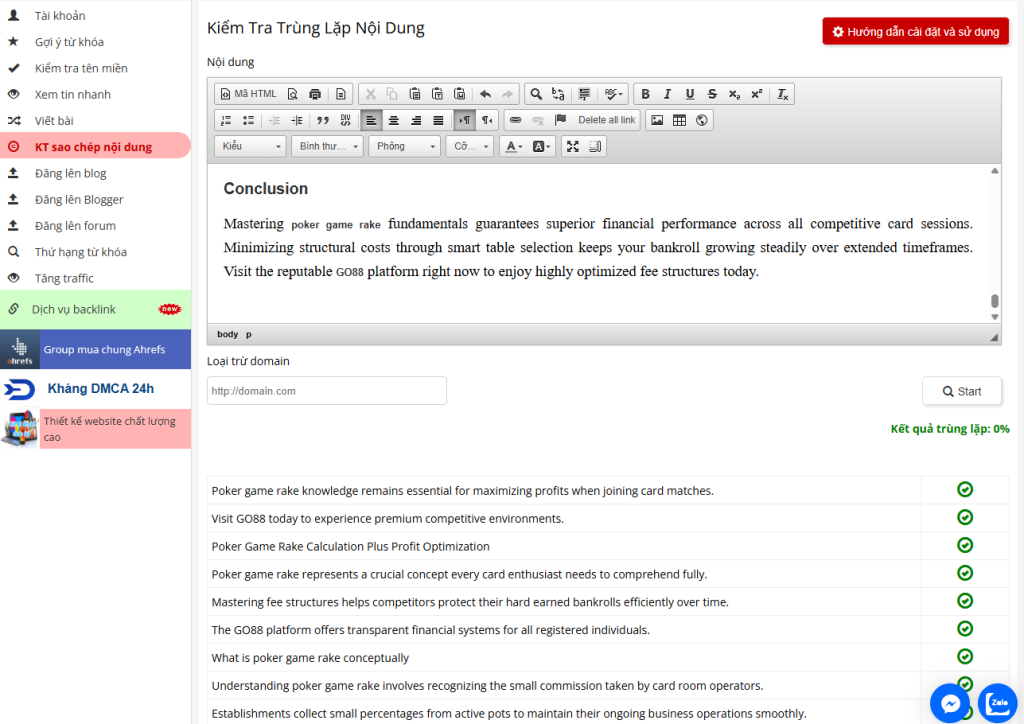
Conclusion
Mastering poker game rake fundamentals guarantees superior financial performance across all competitive card sessions. Minimizing structural costs through smart table selection keeps your bankroll growing steadily over extended timeframes. Visit the reputable GO88 platform right now to enjoy highly optimized fee structures today.