

The most crowded address in the solar system just got busier. Astronomers have confirmed 128 new moons in orbit around Saturn, taking the ringed giant’s total to 274 and setting a record that may stand for years. The moons were recognised after a long survey campaign and a rigorous checking process, and they transform our picture of just how cluttered the outer solar system really is.
Unlike the famous large moons Titan and Enceladus, the newcomers are modest objects. Most are irregular in shape, a few kilometres wide, and follow sprawling orbits that carry them far from Saturn’s rings. A large share move in retrograde, travelling against the planet’s spin, which is the classic signature of bodies captured by gravity rather than formed in place.
Stacking starlight on Mauna Kea
Finding them required the Canada-France-Hawaii Telescope and a method built for exactly this problem. Astronomers, including a University of British Columbia team, took repeated deep images and stacked them along the expected motion of distant moons, a process that pulls extremely faint objects out of background noise. Candidates then needed follow-up observations across several years to lock down their orbits.
Only then did the International Astronomical Union add them to the official list. Readers interested in the university research behind the survey can start at the University of British Columbia. It is the second time in recent years the same broad collaboration has delivered a large batch of Saturnian moons, and the researchers say the technique has not yet reached its limit.
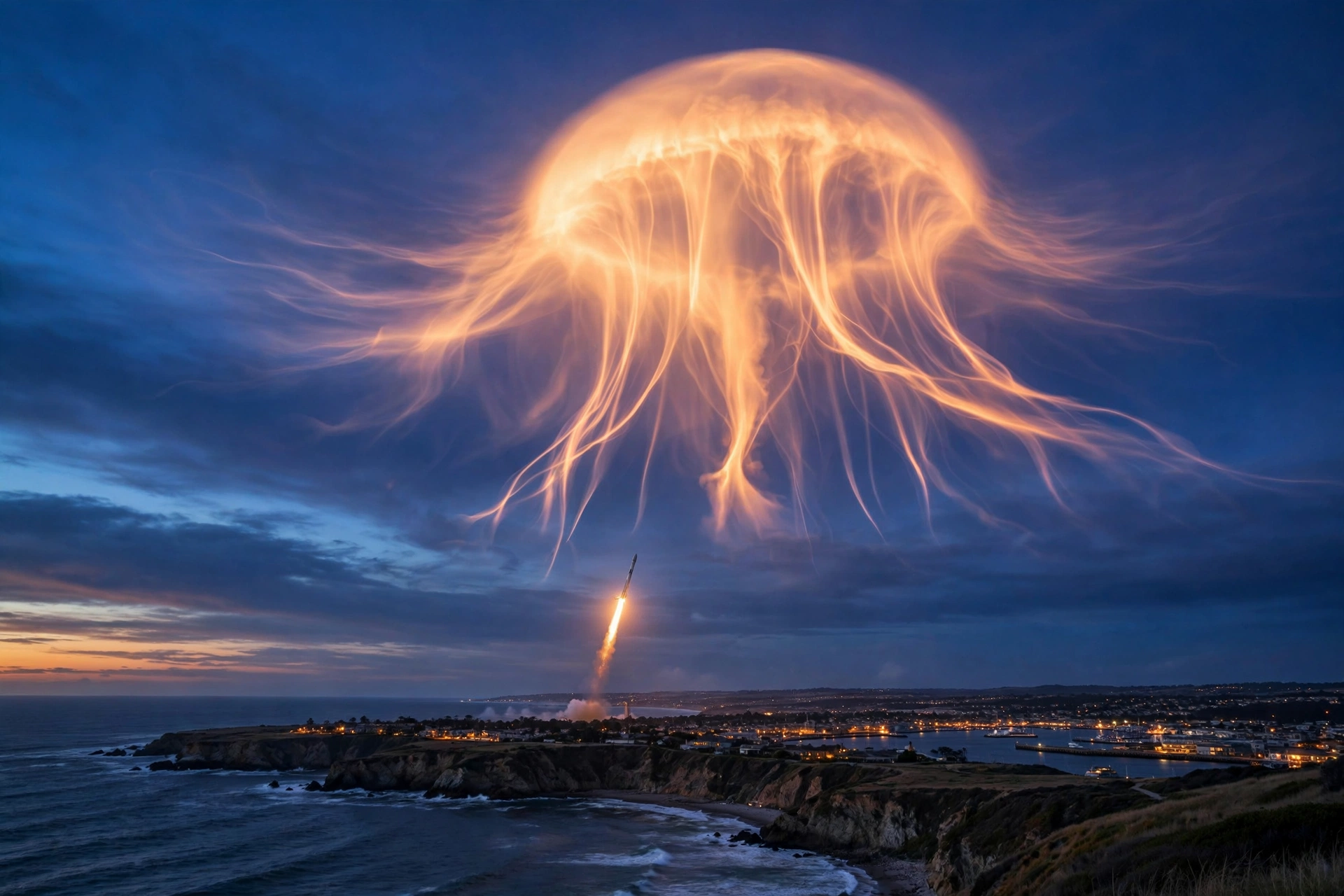
Yesterday we covered a very different kind of spectacle in the twilight rocket launch that drew a glowing jellyfish in the sky; the Saturn work sits at the opposite extreme, invisible to the naked eye yet far larger in scientific consequence.
Debris that tells a story
The moons cluster into families, and families are evidence. When fragments share near-identical orbits, astronomers read them as the remains of a single parent moon destroyed in a collision. Reconstructing those events helps date the upheavals that shaped Saturn’s system, and some families appear young enough to suggest the destruction happened well after the planets themselves had formed.
There is also a growing housekeeping problem. If every orbiting pebble counts as a moon, improved telescopes could push Saturn’s total past a thousand. Some astronomers welcome the completeness; others argue for a size cut-off. The debate is friendly but real, and this announcement, adding nearly half as many moons again in one stroke, has given it fresh urgency.
The long road to recognition
It is worth pausing on how long this took. Some of the images that revealed these moons were captured years ago, and the interval between a smudge in a survey photograph and a line in the official catalogue is measured in observing seasons, not weeks. Orbits must be recovered at multiple oppositions, positions cross-checked against star catalogues, and the possibility of a coincidental background object excluded beyond reasonable doubt. The process is deliberately conservative, because a catalogue entry, once granted, is used by mission planners and theorists alike.
That caution also explains why the announcement arrived as a single large batch rather than a drip of individual claims. The team waited until the full set could be defended together. The result is a rare thing in astronomy news: a record that is unlikely to be walked back. What may change is its size. Archived images from other telescopes almost certainly contain some of these same moons, unnoticed, and reprocessing old data with modern software has become one of the most productive, and cheapest, forms of observation in the field.
If you step outside on a clear night this week, Saturn will look exactly as it always does, a calm, steady point of light. Nothing about the planet changed. What changed is us: our instruments, our patience and our willingness to spend years proving that a speck of light is a world, however small. The 128 new moons were always there. We have simply, finally, learned how to see them, and that may be the most encouraging part of the entire announcement.
With 274 confirmed moons against Jupiter’s 95, Saturn’s supremacy is emphatic. The deeper point, though, is that a planet visited by spacecraft and studied for centuries can still surprise us by the hundred. The outer solar system remains, in the best sense, unfinished business.

