

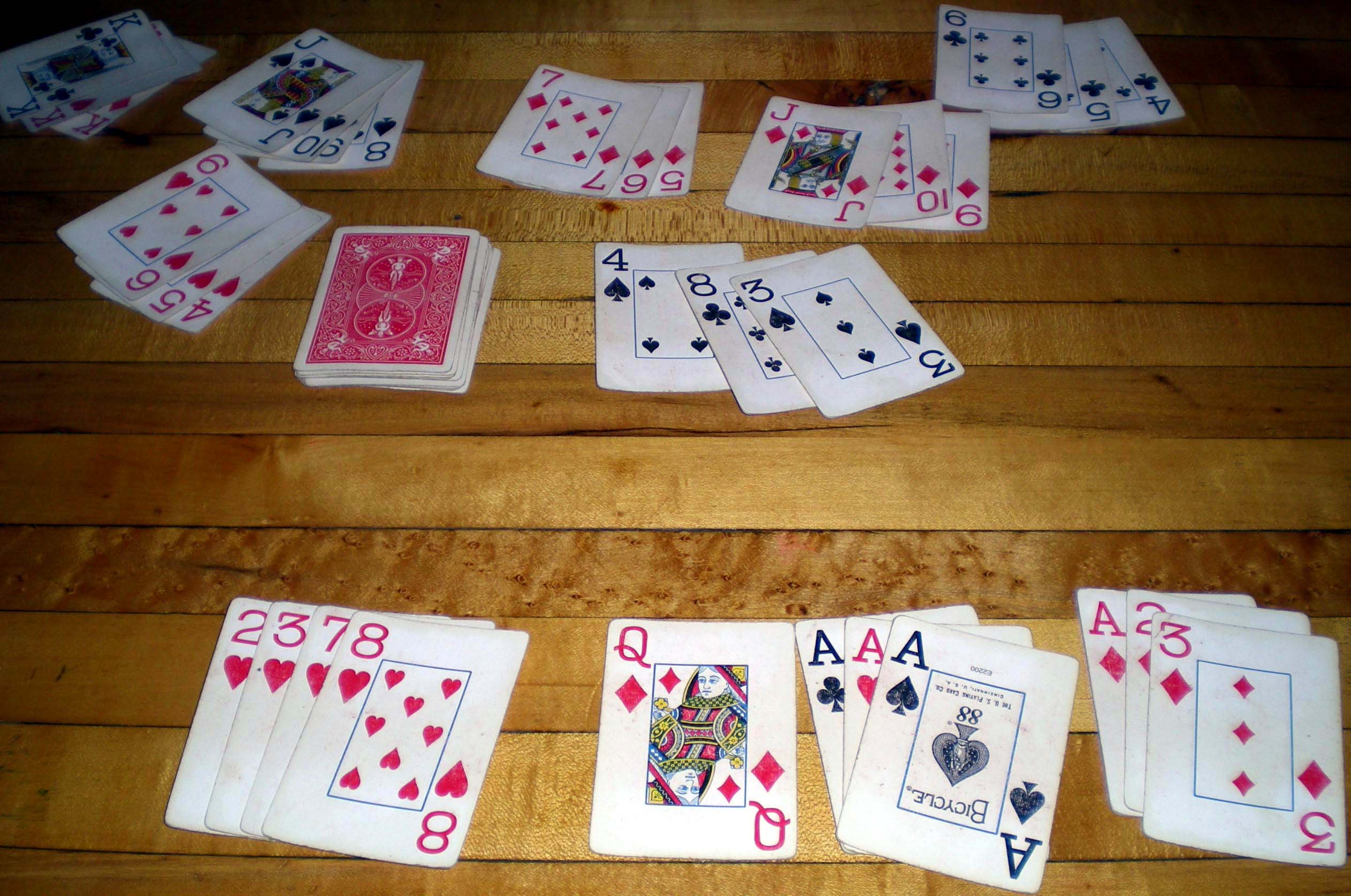
Introduction to Rummy
Rummy is a popular card game enjoyed by people who like card combinations, logical thinking, observation, and strategic decision-making. The game revolves around arranging cards into valid sequences and sets. Whether you are learning the basics for the first time or looking to improve your understanding of different rummy variations, learning the core concepts can make the experience more enjoyable.
Today, players can explore several forms of rummy, including Indian Rummy, Gin Rummy, Points Rummy, Pool Rummy, and other variations. Each version may have its own rules, scoring system, and gameplay format. However, the central idea remains similar: organize your cards into valid combinations and complete your hand according to the rules of the particular game.
For more information about rummy games, card combinations, and related guides, visit https://allrummyss.com
Top Rummy – https://rummy-top.com/
What Is the Rummy Card Game?
Rummy is a card-matching game in which players work to create meaningful combinations from the cards in their hands. These combinations generally fall into two categories: sequences and sets.
A sequence contains consecutive cards of the same suit. For example, 4♥, 5♥, and 6♥ form a sequence because the cards are consecutive and belong to the same suit.
A set contains cards of the same rank but different suits. For example, 8♠, 8♥, and 8♦ can form a valid set under common rummy rules.
The exact number of cards dealt, the number of players, the use of jokers, and the winning conditions depend on the variation being played. Understanding the rules before starting is important, especially when switching between different formats.
Basic Rules of Rummy
Although rummy has many variations, most versions follow a familiar draw-and-discard structure.
1. Understand Your Cards
At the beginning of a round, each player receives a hand of cards. In the common 13-card Indian Rummy format, each player receives 13 cards.
The first step is to examine the cards and identify possible sequences, sets, and combinations that could be completed with future draws.
2. Draw a Card
On a turn, a player generally draws one card from either the closed deck or the face-up discard pile, depending on the game’s rules.
The closed deck keeps the next card hidden, while the discard pile allows players to see the available top card. The choice depends on the cards needed and the player’s current arrangement.
3. Arrange Sequences and Sets
After drawing, review your hand and look for useful combinations. You may have two consecutive cards of the same suit that need one additional card to complete a sequence. Alternatively, you might have matching ranks that could form a set.
Organizing cards by suit and rank can make these opportunities easier to recognize.
4. Discard an Unnecessary Card
Most draw-and-discard rummy formats require a player to discard one card at the end of each turn. Choosing what to discard is an important part of the game.
Consider whether the card could help complete a combination before removing it. Also, avoid discarding cards that an opponent may be collecting when this can reasonably be inferred from their visible choices.
5. Complete a Valid Hand
In common 13-card Indian Rummy, a valid declaration requires all cards to be arranged into valid combinations, including at least two sequences, one of which must be pure. The remaining cards can generally be arranged into additional sequences or sets.
Always check the specific variation’s rules before declaring because requirements can differ.
Understanding Rummy Sequences
Sequences are among the most important combinations in rummy. Learning how they work helps beginners understand the objective and organize their cards effectively.
Pure Sequence
A pure sequence consists of at least three consecutive cards of the same suit without using a joker as a substitute for a missing card.
Examples include:
- 3♣, 4♣, 5♣
- 7♦, 8♦, 9♦
- 10♠, J♠, Q♠
In standard 13-card Indian Rummy, at least one pure sequence is required for a valid declaration.
Impure Sequence
An impure sequence contains consecutive cards of the same suit with a joker replacing a missing card.
For example, 5♥, Joker, 7♥ may form an impure sequence when the joker represents 6♥.
Jokers can provide flexibility, but they do not normally replace the requirement for a pure sequence in Indian Rummy.
What Is a Set in Rummy?
A set is a combination of three or four cards of the same rank, usually with different suits.
Examples include:
- 6♠, 6♥, 6♦
- Q♣, Q♦, Q♥, Q♠
- 9♠, 9♦, Joker, when permitted by the applicable rules
Sets provide another way to organize cards that cannot easily be incorporated into sequences.
One common mistake is assuming that any three cards of the same number form a valid set. In many standard formats, the cards must have different suits. Rules concerning duplicate cards and jokers may vary, so check the relevant table rules.
Different Types of Rummy Games
Rummy is a family of card games rather than a single format. The following variations offer different gameplay experiences.
Indian Rummy
Indian Rummy commonly uses 13 cards per player. Participants draw and discard cards while attempting to form valid sequences and sets. The pure-sequence requirement is a defining feature of the standard format.
Gin Rummy
Gin Rummy is a distinct variation in which players typically work with ten-card hands. Its rules, scoring, and winning conditions differ from Indian Rummy, making it useful to study separately rather than assuming the formats are identical.
Points Rummy
Points Rummy is commonly played over individual deals, with scoring determined by the applicable rules. Players should understand how points and penalties are calculated before starting a round.
Pool Rummy
Pool Rummy typically involves multiple deals and a cumulative scoring system. Players who reach the specified penalty-point threshold may be eliminated. The exact threshold and scoring rules depend on the format.
Other Rummy Variations
Different regions and gaming platforms may offer additional versions, including formats with different hand sizes, turn structures, and scoring methods. Before trying a new variation, review its instructions carefully.
You can explore general rummy information and related topics at https://allrummyss.com.
Useful Rummy Strategies for Beginners
Learning the rules is only the first step. Good decision-making also involves evaluating your hand, observing visible cards, and understanding which combinations are realistic.
Focus on a Pure Sequence Early
In 13-card Indian Rummy, working toward a pure sequence early can help you meet a key declaration requirement. Identify cards that are close to forming a natural sequence and evaluate whether keeping them makes sense.
Organize Your Hand
Group cards by suit and rank. Keep potential sequences together and identify cards that might form sets. A well-organized hand can help you recognize useful draws and avoid accidental mistakes.
Avoid Holding Too Many Unconnected Cards
Cards that do not fit your developing combinations can make your hand harder to complete. Review them regularly and consider whether retaining them is worthwhile.
High-value cards may increase the penalty in some scoring formats if they remain ungrouped when another player finishes. Their value should therefore be considered alongside their potential usefulness.
Observe the Discard Pile
The discard pile provides information about cards other players no longer need or may be collecting. Pay attention to visible discards, but remember that they do not reveal an opponent’s entire hand.
Use this information to make more informed choices instead of relying on assumptions.
Use Jokers Carefully
Jokers can help complete impure sequences and sets in formats that permit them. However, a joker cannot generally substitute for the required pure sequence in standard Indian Rummy.
Consider where a joker would be most useful before assigning it to a combination.
Check Your Hand Before Declaring
Before declaring, verify that every card belongs to a valid combination and that all required sequences are present. An incorrect declaration can lead to penalties under many rule sets.
Common Rummy Mistakes to Avoid
Beginners often make avoidable errors while learning the game. Understanding these mistakes can improve both confidence and rule awareness.
- Ignoring the pure-sequence requirement: In standard 13-card Indian Rummy, a pure sequence is essential.
- Mixing suits in a sequence: A normal sequence requires consecutive cards of the same suit.
- Creating an invalid set: Matching ranks alone may not be sufficient if the suit requirements are not met.
- Discarding without reviewing your hand: A card that seems unnecessary might complete a useful combination later.
- Forgetting variation-specific rules: Different rummy formats may use different hand sizes and scoring systems.
- Declaring too quickly: Always check every combination before making a declaration.
Avoiding these errors can help make gameplay smoother and reduce unnecessary penalties.
Online Rummy: What Players Should Know
Digital platforms have made it possible to learn about card games through online tutorials, demonstrations, and practice environments. Some platforms offer automated card sorting, rule explanations, and score tracking.
When exploring online rummy, review the platform’s reputation, privacy policy, security practices, age requirements, and terms of service. Be cautious about sharing personal information or downloading applications from unknown sources.
Rules and legal restrictions for online gaming differ by jurisdiction and can change over time. In India, check current central and state requirements before accessing any online gaming service, particularly one involving money or prizes. Never assume that a platform is lawful simply because it is accessible.
For a learning-focused experience, consider practicing the rules with friends or using a suitable free practice mode where legally available. Set personal time limits and never treat a card game as a guaranteed way to earn money.
Benefits of Learning Rummy
Rummy can provide an engaging way to practice several mental skills during recreational play.
Observation: Players pay attention to their own cards and the visible cards selected or discarded during a round.
Planning: Forming combinations involves deciding which cards to keep and which to discard.
Pattern recognition: Players identify relationships between card ranks, suits, and possible combinations.
Decision-making: Each turn presents choices based on incomplete information.
These are potential recreational benefits, not guarantees of improved cognitive performance. The primary purpose should be enjoyment, learning, and friendly competition.
Frequently Asked Questions About Rummy
What is the main objective of rummy?
The objective is generally to arrange the cards in your hand into valid combinations and finish according to the rules of the chosen variation.
What is a sequence in rummy?
A sequence consists of three or more consecutive cards of the same suit, such as 4♠, 5♠, and 6♠.
What is a pure sequence?
A pure sequence is a consecutive group of at least three cards from the same suit without using a joker to replace a missing card.
Can jokers be used in rummy?
Yes. Many variations allow printed or wild jokers to complete certain combinations. Their permitted uses depend on the rules, and jokers do not normally remove the pure-sequence requirement in standard Indian Rummy.
Is Indian Rummy the same as Gin Rummy?
No. Both belong to the rummy family, but they use different rules, hand sizes, and scoring systems.
Where can I learn more about rummy?
You can explore card-game information, general rummy topics, and related guides on AllRummySS.com.
Conclusion
Rummy is an engaging card game built around sequences, sets, observation, and strategic choices. Understanding the rules, organizing your hand, recognizing useful combinations, and checking your cards before declaring can help beginners become more confident players.
Because different variations have different requirements, it is important to learn the rules of the specific game you intend to play. Approach rummy as a recreational activity, play responsibly, and prioritize understanding the game rather than expecting guaranteed results.
For more information about rummy card games, basic rules, gameplay concepts, and related guides, visit https://allrummyss.com and continue exploring the world of rummy.

