

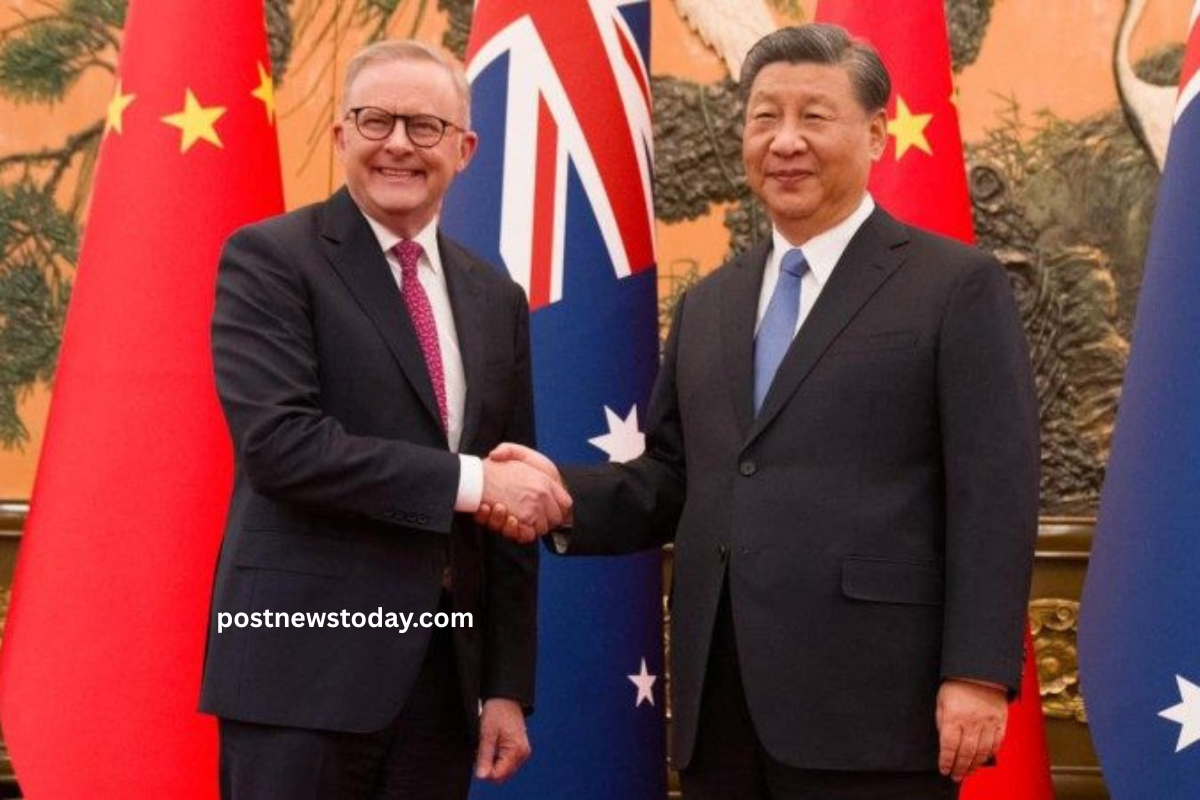
Australia, a vital player in the Indo-Pacific region, has long faced the balancing act of navigating its complex relationships with two powerful nations: China and the United States. While much of the focus in recent years has been on China’s growing influence in the region, Australia’s biggest challenge lies not in managing its relationship with Beijing but in its ongoing, often strained, partnership with Washington. Australia’s unique position in the global political arena forces it to carefully navigate these relationships to maintain its economic interests, national security, and regional stability.
This article explores why Australia’s future challenges will likely come from its dealings with the United States, rather than China. From shifting alliances to economic dependencies, the US-Australia relationship is becoming increasingly complex, and the need for a strategic reevaluation of foreign policy has never been more pressing.
Australia’s Strategic Position in Global Politics
Australia is geographically situated in the heart of the Indo-Pacific, a region that has become a focal point of global power struggles. Australia shares close economic ties with China, its largest trading partner, while maintaining a strong security alliance with the United States through the ANZUS pact. The country’s position between these two giants places it in an inherently delicate diplomatic situation.
Historically, Australia has been closely aligned with the US, sharing common values and a deep history of military cooperation. However, the rise of China as a global economic powerhouse in recent decades has forced Australia to reassess its strategic priorities. With the increasing tension between the US and China, Australia finds itself caught between its economic interests with China and its security obligations to the US.
The Rising Influence of China
In recent years, China’s rise as a global superpower has reshaped the economic and geopolitical landscape of the Indo-Pacific. Australia’s economic prosperity has been closely linked to its trade with China, as the Asian giant has become the primary destination for Australian exports, including natural resources, agricultural products, and minerals.
However, China’s growing influence in the region has also raised concerns for Australia. Beijing’s assertiveness in the South China Sea, its Belt and Road Initiative (BRI), and its increasingly aggressive posture in global politics pose direct challenges to Australia’s regional stability. The Australian government has expressed concerns over China’s actions, particularly regarding the militarization of the South China Sea and its attempts to influence political systems in neighboring countries.
Despite these concerns, Australia has been reluctant to sever economic ties with China, as it is a critical part of its growth strategy. This creates a diplomatic dilemma—how to manage a rising superpower like China while maintaining a close relationship with its traditional ally, the United States?
The United States: Ally or Overbearing Partner?
Australia’s historical relationship with the United States has been defined by shared democratic values, mutual defense agreements, and a strong military alliance. As a part of the ANZUS treaty, Australia has long relied on the US for defense and security guarantees. The US has also been a key partner in trade, technology, and cultural exchanges.
However, the nature of the US-Australia relationship has shifted over the past few years, especially during the presidency of Donald Trump. The “America First” foreign policy led to a more transactional and at times confrontational approach, which caused unease among traditional US allies, including Australia. The US’s withdrawal from international agreements, its erratic foreign policy decisions, and its approach to multilateral organizations often left Australia in a difficult position, caught between loyalty to its security partner and the need for a more nuanced approach to global diplomacy.
The Biden administration’s more traditional foreign policy stance has restored some degree of stability, but challenges remain. The US’s focus on its rivalry with China and its ongoing shift towards a confrontational stance in the Indo-Pacific raises questions about how Australia will navigate this alliance in the future.
US Policies: Economic, Military, and Geopolitical Shifts
The US’s foreign policy trajectory over the past decade has had a significant impact on Australia. The Trump administration’s “America First” policy saw a reduction in US commitment to multilateralism, which disrupted Australia’s approach to global diplomacy. The US’s disengagement from international agreements like the Paris Climate Accord and the Trans-Pacific Partnership (TPP) left Australia scrambling to maintain its relationships with other nations, including China.
In contrast, the Biden administration has emphasized re-engaging with traditional allies and international organizations. However, its focus on countering China’s growing influence in the Indo-Pacific still places Australia in a challenging position. The US’s military presence in the region is seen by some as both a strategic advantage and a potential risk, especially if tensions with China escalate.
Australia’s reliance on the US for defense is complicated by its need to balance these strategic interests with economic ties to China. As the US continues to pursue a more aggressive strategy in the Indo-Pacific, Australia must weigh the benefits of its security alliance with the US against the risks posed by its economic dependency on China.
Trade, Technology, and Economic Dependence
Australia’s trade relationship with China has become the cornerstone of its economic growth, but it also exposes the country to significant vulnerabilities. Over 30% of Australian exports go to China, and this trade relationship is crucial for industries like mining, agriculture, and education. However, the growing tensions between the US and China create an economic fault line that Australia cannot ignore.
The technological rivalry between the two superpowers also complicates Australia’s position. As the US and China engage in a high-stakes battle over emerging technologies like 5G, artificial intelligence, and cybersecurity, Australia faces pressure to align itself with one side or risk being caught in the crossfire. The US’s demands for Australia to exclude Chinese companies like Huawei from its 5G infrastructure, for example, put the country in a difficult position.
Australia’s economic dependence on China, combined with its security obligations to the US, makes it increasingly difficult to navigate this technological and economic divide.
Australia’s Foreign Policy Dilemma: Walking a Fine Line
Australia’s foreign policy is increasingly defined by the challenge of managing its relations with both the US and China. The country is caught in a delicate balancing act, where it must secure its economic interests with China while maintaining its security commitments to the US.
The complexity of this situation has led Australia to adopt a multilateral approach, engaging with regional and global organizations like the United Nations, APEC, and the G20. However, this strategy is not without its risks. As the US and China continue their rivalry, Australia must ensure that its foreign policy does not overly tilt in favor of one side at the expense of the other.
The growing tensions between the US and China will likely force Australia to make difficult decisions in the coming years. The risk of being drawn into a broader geopolitical conflict between the two powers looms large.
The Potential for a Changing US-Australia Relationship
As the global order shifts, so too may the nature of the US-Australia relationship. The possibility of a more independent foreign policy for Australia is becoming increasingly plausible, especially as China continues to assert its influence in the Indo-Pacific.
Public opinion in both Australia and the United States is evolving, with many Australians questioning the costs of maintaining such a close relationship with Washington. Some analysts suggest that Australia may need to pivot towards Asia and deepen its relationships with regional powers like Japan, India, and ASEAN countries, reducing its dependence on the US.
Whether Australia can afford to break away from its reliance on the US and forge a closer relationship with China remains uncertain, but the prospect of a changing global landscape means that Australia’s foreign policy must evolve to reflect these new realities.
The Regional Impact: Southeast Asia and the Pacific Islands
Australia’s relationship with the US and China also has profound implications for its regional neighbors. Southeast Asia and the Pacific Islands are critical to Australia’s strategic interests, particularly in light of China’s growing influence in the region.
Australia has long played a leadership role in the Pacific, providing economic aid, addressing climate change issues, and maintaining security ties. However, China’s Belt and Road Initiative has sought to expand its reach into these areas, creating new challenges for Australia. While the US remains a key ally in the region, its focus on China could risk alienating smaller nations that rely on Australian support.
Australia must balance its interests in the region, ensuring that it remains a trusted partner for Southeast Asia and the Pacific Islands without becoming embroiled in a broader US-China rivalry.
The Future of Australia’s International Strategy
Looking ahead, Australia’s foreign policy will need to adapt to the evolving dynamics of global geopolitics. The country’s economic dependence on China and its security commitments to the US are increasingly difficult to reconcile, particularly as tensions rise between the two superpowers.
Australia’s future strategy may involve strengthening its position in the Indo-Pacific through multilateral partnerships and regional initiatives, reducing its reliance on either the US or China. By doing so, Australia can safeguard its national interests while promoting regional stability.
As global power shifts, Australia must remain flexible, navigating a changing landscape that requires a strategic approach to both its relationships with China and the US.
Frequently Asked Question
Why is Australia’s relationship with the US more challenging than with China?
Australia faces difficulty balancing its strong security ties with the US and its economic dependence on China. US policies, especially under the “America First” approach, complicate Australia’s position, especially as China becomes a dominant economic partner.
How dependent is Australia on China economically?
Australia relies heavily on China, its largest trading partner, with over 30% of exports directed to China, particularly in mining, agriculture, and education.
How has the US shifted its foreign policy under recent administrations?
The US shifted to “America First” under Trump, focusing on unilateralism. Under Biden, there’s a return to multilateralism, but the focus on countering China remains.
What is the significance of the US-Australia military alliance (ANZUS)?
ANZUS provides mutual defense between the US, Australia, and New Zealand, but evolving US foreign policy raises questions about its future relevance.
Why is Australia caught in the middle of the US-China rivalry?
Australia must balance its security ties with the US and economic dependence on China, as both countries’ interests increasingly clash in the Indo-Pacific.
What role does Australia play in the Pacific Islands and Southeast Asia?
Australia is a key player in the region, offering aid and ensuring stability. However, growing Chinese influence complicates Australia’s position.
How does the US’s technological rivalry with China affect Australia?
Australia faces pressure to align with either the US or China in emerging tech areas like 5G and AI, complicating its technological and trade decisions.
Can Australia break away from its reliance on the US and form closer ties with China?
It’s unlikely, as Australia needs the US for security while depending on China economically. A more independent foreign policy is a potential but risky approach.
How does the US’s military presence in the Indo-Pacific affect Australia?
The US military in the region offers security but also pulls Australia into broader US-China tensions, complicating its regional stance.
What is the future of Australia’s foreign policy?
Australia will likely continue to balance its economic ties with China and security ties with the US while navigating global geopolitical shifts in the Indo-Pacific.
Conclusion
Australia’s most significant foreign policy challenge in the coming years may not be managing its relationship with China, but rather dealing with the complexities of its longstanding alliance with the United States. As China’s influence continues to grow, Australia must balance its economic ties with Beijing and its security commitments to Washington. The evolving global landscape demands that Australia adopt a more nuanced approach to diplomacy, ensuring that it can maintain its position as a regional leader while avoiding the pitfalls of superpower rivalry.
