

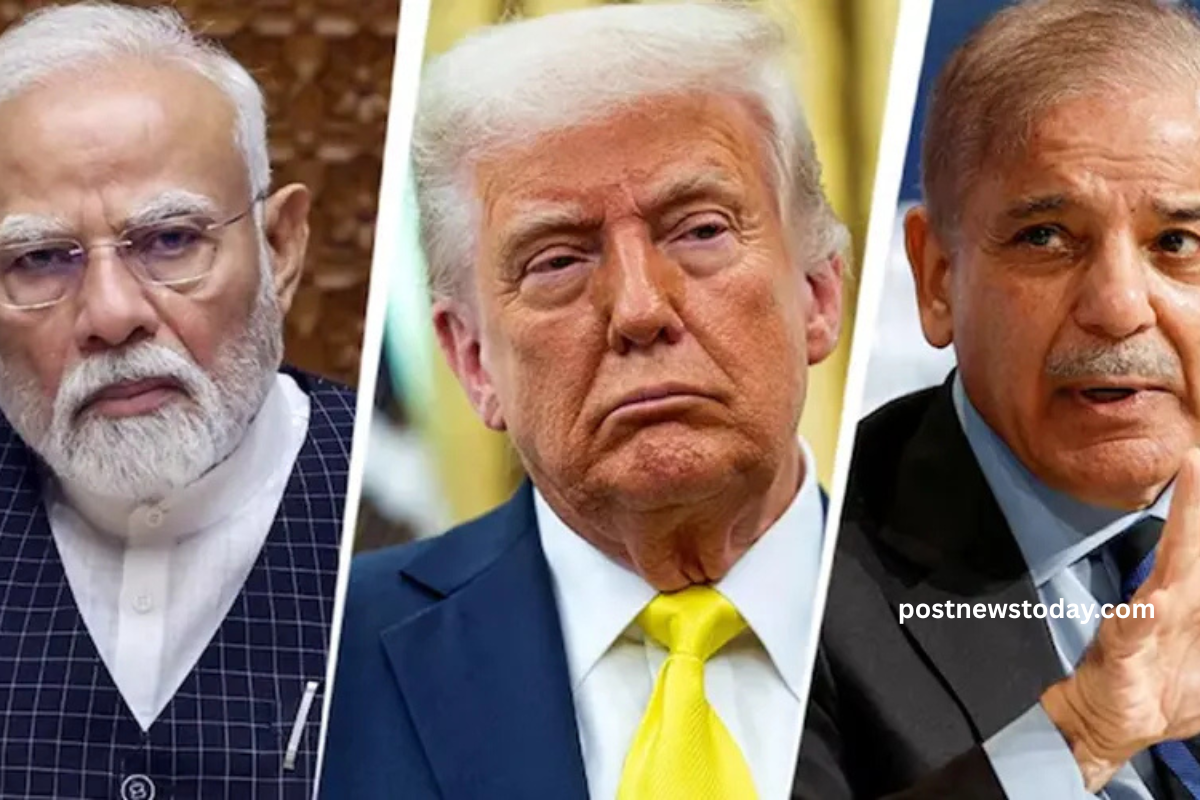
On May 10, 2025, India and Pakistan announced a “full and immediate” ceasefire following intense U.S.-mediated negotiations aimed at halting escalating hostilities in the Kashmir region. The agreement, brokered by U.S. President Donald Trump, Secretary of State Marco Rubio, and Vice President JD Vance, was seen as a significant diplomatic breakthrough in a conflict that had rapidly intensified over the preceding weeks.
Background: Escalation Leading to the Ceasefire
The immediate catalyst for the recent escalation was a terrorist attack on April 22, 2025, in Pahalgam, Indian-administered Kashmir, which killed 26 civilians, including 25 Hindu tourists. India attributed the attack to Pakistan-based militants, leading to a series of retaliatory measures, including the expulsion of Pakistani diplomats, closure of borders, and suspension of the Indus Waters Treaty.
In response, India launched “Operation Sindoor” on May 7, targeting alleged terrorist infrastructure in Pakistan’s Punjab province and Pakistan-administered Kashmir. The operation involved missile strikes on nine locations, including Bahawalpur and Muridke, reportedly killing over 100 militants.
U.S. Role in De-escalation
The United States played a critical role in preventing the crisis from spiraling into full-scale war. High-level talks were held in Washington, D.C., and teleconferences involving both Indian and Pakistani officials were facilitated by the U.S. State Department. According to insiders, the Biden administration emphasized the economic and humanitarian costs of prolonged conflict, especially during a time when both nations are grappling with internal challenges like inflation, climate shocks, and political unrest.
President Trump, in a nationally televised address, stated, “Peace between India and Pakistan is not just a regional imperative; it is a global one. We commend both sides for choosing dialogue over destruction.”
Terms of the Ceasefire
The ceasefire agreement includes the following key provisions:
- An immediate halt to all cross-border military activities, including shelling and aerial incursions.
- Restoration of diplomatic missions and the return of expelled envoys.
- Reinstatement of trade and transit links.
- A mutual commitment to curb terrorist activity emanating from their territories.
- Establishment of a U.S.-led monitoring group to ensure compliance for the next 90 days.
Both countries have agreed to reconvene in Geneva in June for a follow-up dialogue under the auspices of the United Nations.
Domestic Reactions in India and Pakistan
In India, Prime Minister Narendra Modi defended the strikes as a “measured and necessary” response but welcomed the ceasefire as a “victory of diplomacy.” Opposition leaders criticized the government’s initial delay in launching diplomatic efforts but supported the return to peace.
In Pakistan, Prime Minister Shehbaz Sharif faced both praise and skepticism. While many lauded his willingness to engage in talks, some critics within the military establishment viewed the ceasefire as capitulation. Large-scale rallies were held in Islamabad, both in favor of and against the ceasefire.
Regional and Global Reactions
The ceasefire was broadly welcomed across the region and the world. China called it “a constructive step toward regional stability,” while the European Union praised the United States for its leadership in de-escalating tensions.
Afghanistan, which has historically suffered collateral damage from Indo-Pak conflicts, issued a statement expressing hope that this agreement would lead to a “more peaceful South Asia.”
The UN Secretary-General called on both nations to use this opportunity to address the underlying causes of the conflict, particularly the disputed status of Jammu and Kashmir.
The Road Ahead: Fragile but Hopeful
Despite the positive developments, analysts remain cautious. Ceasefire agreements between India and Pakistan have been reached before, only to be broken by further violence or political shifts. The durability of this truce will depend largely on political will, public sentiment, and international pressure.
Trust remains low. India insists that Pakistan must take verifiable action against terrorist groups operating within its borders. Pakistan, meanwhile, maintains that India must cease its “repressive policies” in Kashmir.
Yet, the fact that both nations have agreed to a ceasefire under international supervision suggests a rare window of opportunity. The resumption of diplomatic and economic ties could help build confidence and pave the way for more substantive negotiations in the future.
Frequently Asked Questions
What triggered the recent India–Pakistan conflict?
The conflict escalated after a terrorist attack in Pahalgam, Indian-administered Kashmir, which killed 26 civilians, including Hindu pilgrims. India blamed Pakistan-based terrorist groups for the attack, prompting retaliatory military action.
What is “Operation Sindoor”?
“Operation Sindoor” was a military offensive launched by India targeting terrorist infrastructure in Pakistan’s Punjab province and Pakistan-administered Kashmir. It involved coordinated missile strikes on locations allegedly linked to terrorist activity.
What role did the United States play in the ceasefire agreement?
The United States played a crucial mediating role. American leaders facilitated emergency discussions, highlighted the global consequences of escalation, and helped both nations craft a framework for de-escalation and future cooperation.
What are the main terms of the ceasefire?
The ceasefire agreement includes a halt to all cross-border hostilities, restoration of diplomatic relations, resumption of trade links, commitments to curb terrorism from within national borders, and the establishment of a U.S.-led monitoring team to ensure compliance.
Has a ceasefire been attempted before between the two countries?
Yes, India and Pakistan have agreed to several ceasefires in the past. Notable examples include the 2003 Line of Control agreement and the 2021 reaffirmation. Unfortunately, most of these were disrupted by subsequent incidents or lack of political momentum.
What are the risks that could derail the current ceasefire?
The ceasefire could be threatened by fresh terrorist attacks, shifts in political leadership, growing nationalist sentiments, or failure to enforce promised anti-terror measures. Trust between the nations remains fragile.
Is the Kashmir issue resolved as part of this agreement?
No, the ceasefire does not resolve the long-standing Kashmir dispute. It serves as a temporary measure to stop violence and facilitate diplomatic engagement, with hopes of addressing deeper issues through continued dialogue.
Conclusion
The ceasefire between India and Pakistan, brokered with help from the United States, marks a tentative but meaningful pause in a decades-long cycle of conflict and mistrust. While it does not address core issues such as the Kashmir dispute, it opens the door for future dialogue, economic cooperation, and people-to-people engagement.
