

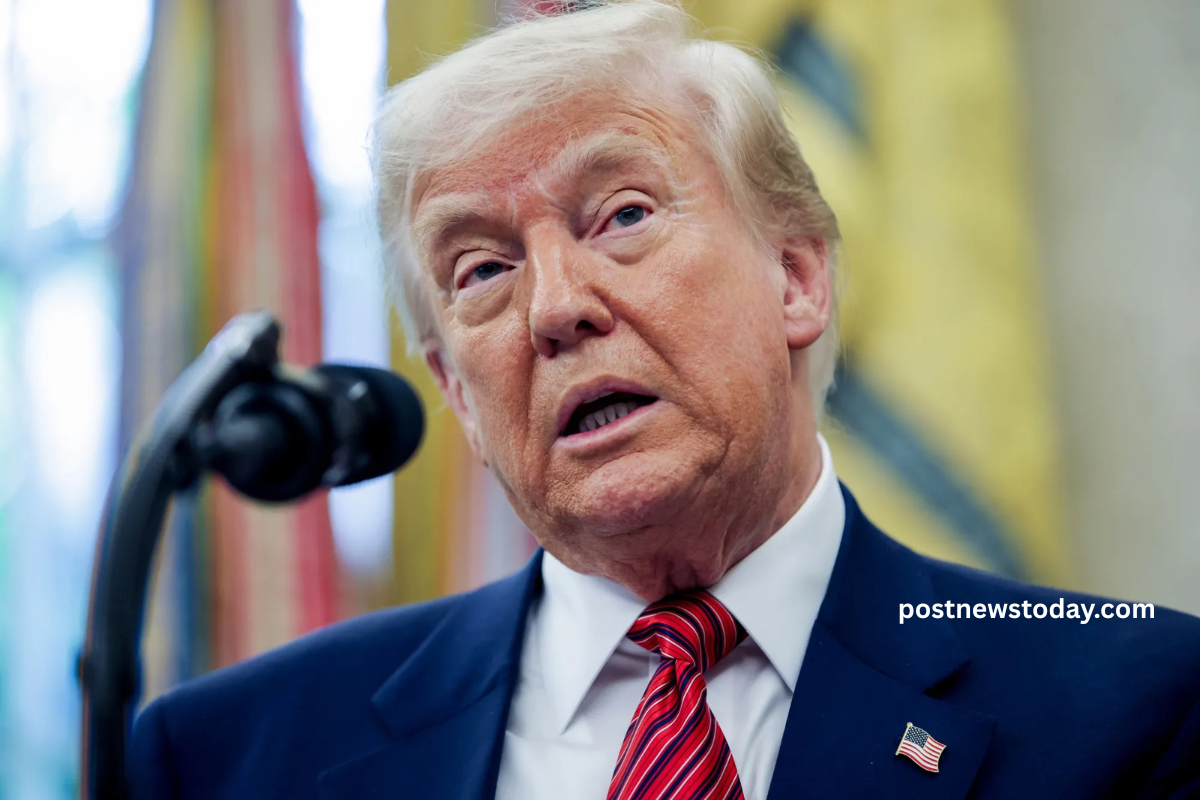
In a development that could reshape the global trade landscape, former U.S. President Donald Trump has signaled that “substantive” negotiations with China could result in the rollback of tariffs imposed during his administration’s trade war. This statement, which emerged during a recent political rally and was later expanded upon in an interview, reflects both the complexities of U.S.-China relations and the ongoing debate over tariffs’ impact on the American economy.
A History of Tensions
The U.S.-China trade conflict began in earnest during Trump’s presidency, with the first wave of tariffs taking effect in 2018. The Trump administration argued that the tariffs were necessary to combat what it described as decades of unfair trade practices by Beijing, including intellectual property theft, forced technology transfers, and massive trade imbalances.
Tariffs were imposed on over $360 billion worth of Chinese goods. In return, China levied retaliatory tariffs on U.S. exports such as soybeans, pork, and automotive parts. What followed was a multi-year standoff that roiled global markets, disrupted supply chains, and intensified diplomatic tensions.
The Phase One Deal
In January 2020, both countries signed a “Phase One” trade agreement, under which China pledged to increase purchases of U.S. goods and services by $200 billion over two years. In exchange, the U.S. agreed to scale back some tariffs. However, the COVID-19 pandemic and worsening geopolitical tensions prevented full implementation of the deal, and progress stalled.
Trump’s Recent Comments
During a campaign-style event in Ohio, Trump was asked about the potential for renewed talks with Beijing should he return to office. “We had very substantive talks with China before,” he said. “They respected the tough stance we took, and they knew we meant business. If we sit down again — real talks — we can absolutely work something out that’s fair. Tariffs don’t have to stay forever.”
He added, “The goal isn’t punishment — the goal is fairness. If China is willing to come to the table in good faith, we can look at rolling back tariffs that hurt our farmers and manufacturers.”
These comments suggest a willingness to re-engage with Beijing on trade, albeit on terms that Trump deems beneficial to U.S. interests. His tone represented a subtle shift from previous rhetoric, which often focused on confrontation and economic decoupling.
Economic Implications
The possibility of reduced tariffs has significant implications for the global economy. Economists have long debated the effectiveness of tariffs as a policy tool. Supporters argue they protect domestic industries from foreign competition, while critics contend they raise costs for consumers and disrupt global supply chains.
A 2021 study by the Peterson Institute for International Economics found that U.S. tariffs on Chinese goods cost American households an average of $1,200 annually. Moreover, many U.S. businesses reported increased input costs, leading to higher prices for finished products.
“If tariffs are reduced, we could see immediate relief in some sectors, particularly retail and manufacturing,” says Dr. Olivia Carter, an economist at the Brookings Institution. “However, the bigger question is whether the structural issues that led to the tariffs — like intellectual property rights and trade imbalances — can be addressed through negotiation rather than confrontation.”
The Political Dimension
Trump’s statement comes as part of a broader repositioning ahead of the 2024 presidential election. His economic record remains central to his campaign, and the trade war with China is both a point of pride and controversy. While it appealed to nationalist sentiments and won support in key swing states, it also drew criticism for its impact on farmers and consumers.
Trump’s willingness to consider tariff reductions may be a strategic move to broaden his appeal. “He’s trying to walk a fine line,” notes Sarah Montgomery, a political analyst. “On one hand, he wants to maintain his tough-on-China image. On the other, he’s acknowledging that the economic pain of tariffs has real consequences — and voters remember that.”
Republicans are divided on the issue. Some lawmakers, particularly those representing agricultural states, have pushed for reduced tariffs and increased market access. Others, aligned with the party’s hawkish wing, favor maintaining pressure on Beijing.
China’s Position
Beijing has long criticized the tariffs as illegal and counterproductive. In response to Trump’s recent remarks, Chinese foreign ministry spokesperson Mao Ning stated that China is open to dialogue but expects mutual respect and the removal of what it views as “unjustified” restrictions.
“China does not want a trade war, but it is not afraid of one,” she said during a press briefing. “We hope that any future U.S. administration will view China objectively and engage in cooperation rather than confrontation.”
Chinese state media have taken a cautiously optimistic tone, framing Trump’s comments as a potential thaw but warning that trust must be rebuilt after years of hostility.
Industry Response
American businesses that rely on global supply chains welcomed the prospect of lower tariffs. The National Retail Federation, which has consistently opposed trade barriers, issued a statement urging both nations to “build upon prior progress and develop a comprehensive framework for long-term economic cooperation.”
Tech companies, many of which were caught in the crossfire, echoed similar sentiments. Apple, for example, faced supply disruptions and increased costs during the height of the trade war. A spokesperson said the company supports “stable and predictable trade relations that promote innovation and growth.”
Farmers, too, are hopeful. During the trade war, Chinese tariffs on soybeans and other commodities devastated export markets. Although emergency aid was provided, many farming communities faced long-term losses. The American Farm Bureau Federation described renewed negotiations as “an encouraging sign.”
Challenges Ahead
Despite the optimistic tone, major obstacles remain. Chief among them is the erosion of trust. The collapse of earlier talks, as well as the broader geopolitical rivalry — including disputes over Taiwan, human rights, and technology — complicates any return to normalcy.
Additionally, the global economic landscape has changed since 2018. The COVID-19 pandemic exposed vulnerabilities in supply chains, prompting both countries to emphasize self-reliance. The Biden administration, for instance, has continued some of Trump’s policies, including tariffs and investment restrictions, while also pursuing its own industrial policies aimed at reshoring manufacturing.
“The era of globalization as we knew it is over,” says Dr. Michael Zhang, a trade expert at Georgetown University. “Even if tariffs are reduced, the structural decoupling between the U.S. and China may continue in strategic sectors like semiconductors, biotech, and defense.”
Expert Analysis
Trade experts emphasize that any meaningful progress would require more than just tariff cuts. “Tariffs are symptoms, not the disease,” says Emily Rosen, senior fellow at the Council on Foreign Relations. “The core issues — subsidies, market access, data security — require comprehensive dialogue and enforcement mechanisms.”
Some analysts warn against reading too much into Trump’s comments. “We’ve seen this movie before,” says Paul Kim, a former USTR negotiator. “Trump often uses trade policy as a bargaining chip. The real test is whether both sides are willing to make tough compromises.”
Still, others see an opportunity. “There’s a political window here,” argues Carter. “The U.S. and China are both facing economic headwinds. Trade détente could provide mutual benefits — but it has to be approached with realism and accountability.”
Looking Ahead
As Trump continues to campaign and shape the GOP’s platform, his evolving stance on China will be closely scrutinized. For now, the prospect of tariff reductions remains hypothetical — but it opens the door to a broader conversation about the future of U.S.-China relations.
Whether substantive negotiations materialize or remain political rhetoric, the implications are far-reaching. From Wall Street to Main Street, the world is watching.
Frequently Asked Questions
What tariffs did Trump impose on China during his presidency?
Trump imposed tariffs on more than $360 billion worth of Chinese goods, targeting industries such as electronics, steel, aluminum, and consumer products. The move was aimed at addressing trade imbalances and alleged unfair practices by China.
What is the Phase One trade deal?
The Phase One deal, signed in January 2020, was an agreement where China pledged to purchase an additional $200 billion in U.S. goods and services over two years and make structural changes to areas like intellectual property. In exchange, the U.S. agreed to delay or reduce some tariffs.
Why are tariffs controversial?
Tariffs are seen by some as tools to protect domestic industries and create leverage in trade negotiations. Critics argue they increase consumer prices, disrupt supply chains, and hurt U.S. businesses reliant on global imports.
What did Trump recently say about tariff cuts?
Trump indicated that if negotiations with China are substantive and conducted in good faith, he would be open to reducing tariffs. He stressed that the goal was to achieve fair trade, not to punish.
How has China responded to Trump’s remarks?
China has expressed cautious interest in resuming dialogue but insists that talks must be based on mutual respect and fairness. Officials emphasized their willingness to engage but also signaled that trust must be rebuilt.
Conclusion
Trump’s recent openness to renegotiating tariffs with China reflects a potential shift in U.S. trade policy, especially if he returns to office. While his previous administration championed tariffs as a means to confront China’s trade practices, his latest remarks suggest a nuanced approach that blends assertiveness with economic pragmatism.
