

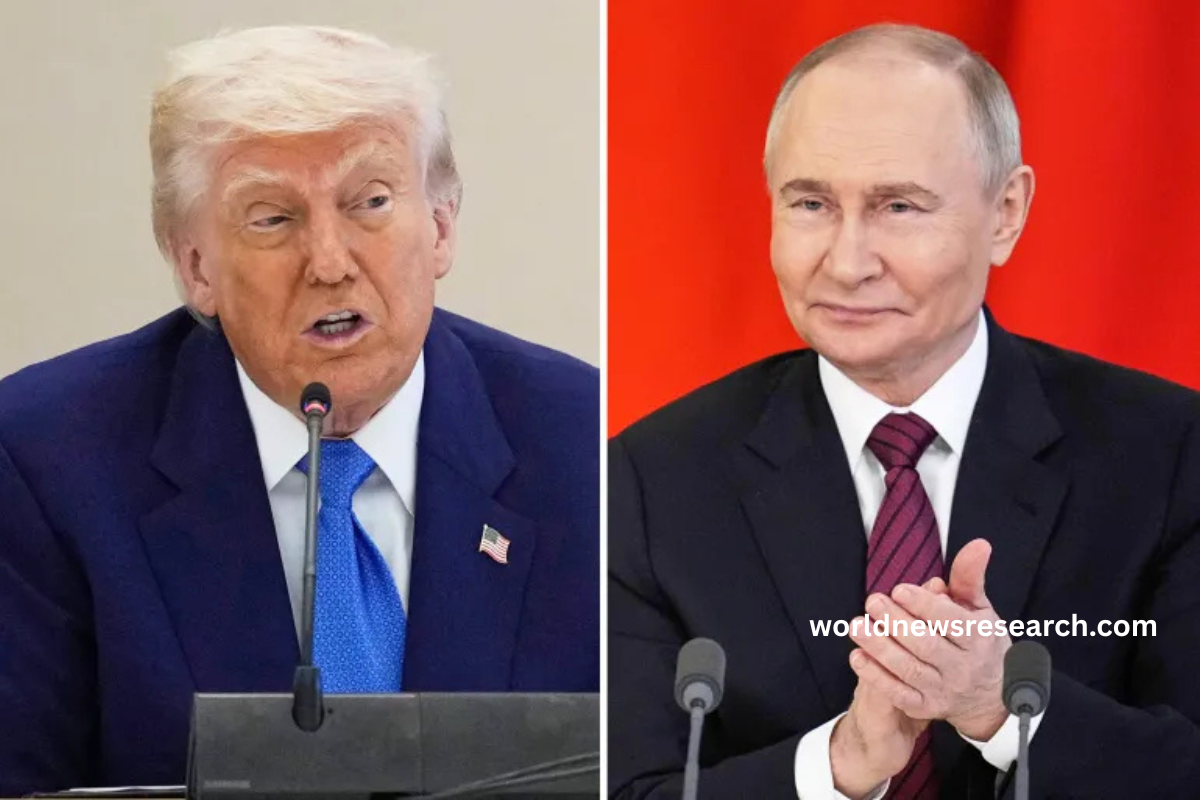
In a significant diplomatic move, former U.S. President Donald Trump announced that Ukraine and Russia will initiate direct negotiations aimed at achieving a ceasefire, following a high-stakes phone conversation with Russian President Vladimir Putin. The call, which lasted nearly two hours, marks a pivotal moment in the ongoing Russia-Ukraine conflict that has ravaged Eastern Europe for over two years.
The Trump-Putin Call: A Turning Point?
The Trump-Putin call was described as both “serious” and “frank,” covering a range of issues, including the humanitarian crisis in Ukraine, the impact of the war on global markets, and the political stalemate in diplomatic negotiations. Trump reportedly pushed for an immediate, unconditional 30-day ceasefire to create space for dialogue and de-escalation. Although no formal truce was agreed upon during the call, both leaders expressed openness to continuing discussions.
One major outcome of the discussion was a proposed exchange of 1,000 prisoners of war. This step, while symbolic, is widely seen as a gesture of goodwill that could lay the groundwork for more substantive peace negotiations.
The Role of the Vatican and Other Mediators
Trump floated the idea of the Vatican serving as a neutral host for future peace talks. This suggestion aligns with his previously stated preference for traditional diplomacy over multilateral forums. Pope Francis has consistently advocated for a peaceful resolution to the war and expressed willingness to facilitate negotiations.
Several neutral countries, including Switzerland and Austria, have also been mentioned as possible hosts. However, Trump’s endorsement of the Vatican gives it significant weight in ongoing planning.
Reactions from Ukraine and European Leaders
Ukrainian President Volodymyr Zelenskyy responded to the announcement with caution. While he welcomed any move toward peace, he emphasized that no agreement should be made without Ukraine’s direct participation. Zelenskyy reiterated that Ukraine would not accept any terms that compromised its sovereignty or territorial integrity.
European leaders offered mixed reactions. French President Emmanuel Macron voiced cautious optimism but stressed that Russia must first demonstrate a genuine commitment to peace. German Chancellor Annalena Baerbock called for full transparency in future talks and urged that the European Union be included in the negotiation process.
While supportive of Trump’s outreach to Putin, many European leaders criticized what they saw as a unilateral approach that risks sidelining allies and Ukraine itself.
Russia’s Position and Strategic Calculations
The Kremlin released a brief statement confirming the call and characterizing it as “constructive.” However, it also reiterated Russia’s longstanding demands: Ukrainian neutrality, the recognition of Crimea as Russian territory, and autonomy for Donbas regions currently under Russian control.
Analysts believe the Kremlin’s willingness to enter discussions may be partly driven by economic strain and international sanctions. Still, critics caution that Russia may use negotiations to buy time and rearm, as it has allegedly done during past ceasefires.
Shortly after the Trump-Putin call, Ukrainian officials reported renewed drone and missile attacks on cities including Odesa and Kharkiv, casting doubt on Russia’s sincerity. Civilian casualties were reported, and key infrastructure was damaged.
A Fragile Opportunity for Peace
Despite these setbacks, Trump’s call appears to have created a rare opening for diplomacy. Supporters argue that his personal rapport with Putin and nontraditional approach to foreign policy could help break the deadlock. Skeptics warn that without firm conditions and international oversight, any ceasefire could be short-lived.
Calls for a broader peace summit have intensified. Ukraine, the U.S., EU, and UK are expected to push for an international framework that guarantees Ukrainian security and post-war reconstruction. Additionally, global institutions like the UN and the Organization for Security and Co-operation in Europe (OSCE) may play supervisory roles if a ceasefire is achieved.
The Road Ahead
No formal date has been set for ceasefire negotiations, and many hurdles remain. Trust between the two sides is at a historic low. Nevertheless, diplomatic momentum appears to be building, with more high-level calls and meetings expected in the coming days.
For Trump, this marks a high-profile moment to reassert influence on the world stage and potentially reshape U.S. foreign policy from outside of office. Whether this effort leads to real peace or becomes another failed attempt at diplomacy remains to be seen.
The coming weeks will be crucial in determining whether this initiative marks the beginning of the end of the war—or simply another chapter in a prolonged and painful conflict.
Frequently Asked Question
What did Trump and Putin discuss in their recent phone call?
Trump and Putin discussed the ongoing Russia-Ukraine war, possible steps toward peace, a temporary ceasefire, humanitarian concerns, and a prisoner exchange. Trump proposed a 30-day unconditional ceasefire, while Putin reiterated Russia’s demands, including Ukraine’s neutrality and territorial claims.
Did the Trump-Putin call result in an immediate ceasefire?
No. While both sides agreed to initiate negotiations and exchange prisoners of war, there was no immediate ceasefire. The call has, however, sparked hope for renewed diplomatic engagement.
Will Ukraine be involved in the peace negotiations?
Ukrainian President Volodymyr Zelenskyy stated clearly that Ukraine must have a central role in any peace talks. Although Ukraine was not part of the Trump-Putin conversation, it is expected to be involved in formal negotiations moving forward.
Why was the Vatican suggested as a host for the talks?
Trump proposed the Vatican as a neutral and respected venue. The Vatican has a history of offering diplomatic mediation and is perceived globally as an impartial party.
How have European leaders responded?
European leaders have responded with cautious optimism. Some welcomed the renewed efforts toward diplomacy, while others stressed that any discussions must include Ukraine and key European allies. There is concern over the risk of backchannel deals that exclude essential parties.
Is Russia likely to honor a ceasefire agreement?
There is skepticism. Russia has previously breached ceasefire agreements, and military operations reportedly continued after the Trump-Putin call. Critics argue that the Kremlin might use negotiations to regroup militarily.
What role is Trump playing in these negotiations if he’s not in office?
Although he currently holds no official position, Trump remains an influential political figure. His relationship with Putin and his unconventional diplomacy give him a unique platform to influence international discussions, even from outside of government.
Conclusion
The Trump-Putin call represents a potentially meaningful step toward ending the war in Ukraine, though it comes with many uncertainties. While no formal ceasefire has been achieved, the conversation has opened a new diplomatic channel, potentially paving the way for future peace negotiations.
