

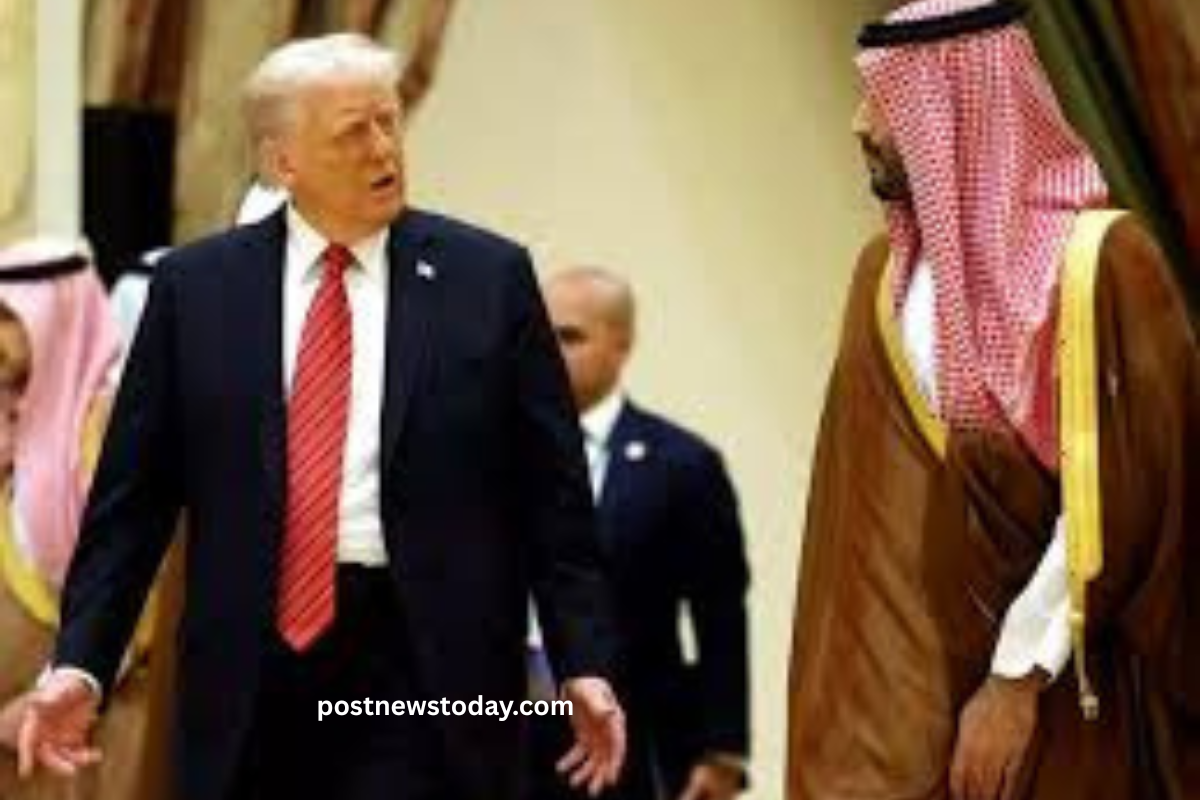
InArtificial intelligence (AI) has emerged as one of the most consequential technologies of the 21st century, shaping economic development, military capabilities, and global power balances. As the United States and China race to dominate AI innovation, the Middle East—particularly Saudi Arabia and the United Arab Emirates (UAE)—has become a strategic hotspot for influence. Former President Donald Trump’s recent efforts to secure AI deals with these Gulf countries highlight a broader struggle over technological leadership, economic opportunity, and geopolitical alliances. However, these efforts have also exposed a growing divide within the U.S. political landscape, especially among those focused on countering China’s rise.
This article explores the motivations behind Trump’s AI initiatives in Saudi Arabia and the UAE, the nature of the deals, the resulting tensions with China hawks, and the broader implications for U.S. foreign policy in an era of technological competition.
The Strategic Importance of AI in Global Geopolitics
AI is no longer just a tool for innovation; it is now a critical component of national power. Governments worldwide recognize AI’s potential to drive economic growth, revolutionize military capabilities, and influence global governance structures. The ability to lead in AI development can confer decisive advantages in everything from cybersecurity to autonomous weapons systems.
The U.S. and China are the primary competitors in this technological race. China’s substantial investments in AI, coupled with its vast data resources and government coordination, have fueled concerns in Washington about losing the technological edge. This rivalry extends beyond the two superpowers, affecting regions worldwide where AI adoption intersects with geopolitical interests.
Why Saudi Arabia and the UAE?
Saudi Arabia and the UAE have positioned themselves as ambitious players in the AI arena. Both countries are undertaking major economic transformation plans aimed at diversifying their oil-dependent economies. AI technologies are central to these efforts, offering opportunities in smart city development, energy management, healthcare, and military modernization.
The Gulf states’ strategic location at the crossroads of Asia, Africa, and Europe makes them critical partners for any country seeking influence in the Middle East. Furthermore, Saudi Arabia and the UAE have increasingly engaged with China through the Belt and Road Initiative and trade agreements, complicating Washington’s efforts to secure exclusive technological ties.
For the U.S., forging AI partnerships with these countries is a way to deepen economic cooperation, secure military alliances, and counterbalance China’s expanding presence.
Trump’s AI Diplomacy: Key Moves and Motivations
Since leaving office, Donald Trump has remained a significant political force within the Republican Party and international business circles. His recent diplomatic engagements with Saudi Arabia and the UAE have underscored a strategic push to advance U.S. AI cooperation with the Gulf.
Economic Incentives
Trump’s team views AI deals as an avenue to stimulate U.S. economic growth by opening new markets for American AI companies. These deals involve investment opportunities in AI startups, technology transfers, and joint ventures designed to integrate cutting-edge AI solutions into Gulf infrastructure and industries.
Security Cooperation
AI is increasingly integral to modern defense strategies. The deals include collaborations on AI-powered surveillance, cybersecurity systems, and autonomous military technologies. For Saudi Arabia and the UAE, these capabilities enhance their national security and regional power projection.
Political Strategy
For Trump and his allies, these partnerships also serve as a demonstration of American leadership in the region, reaffirming alliances with key Gulf states and presenting a counterweight to Chinese and Russian influence.
The Rift with China Hawks in Washington
Despite the apparent benefits, Trump’s AI deal push has not gone unchallenged. A faction within U.S. politics, often labeled “China hawks,” advocates for a more cautious, hardline approach to engagement with countries that maintain significant ties to China.
Concerns Over Technology Security
China hawks argue that Gulf countries’ economic and technological engagements with Beijing create risks of sensitive AI technologies falling into Chinese hands. The possibility of espionage, data leaks, or dual-use technologies benefiting China is a major concern.
Geopolitical Implications
Critics worry that Trump’s efforts, by strengthening ties with Saudi Arabia and the UAE without adequately addressing their relationships with China, may inadvertently legitimize China’s growing foothold in the Middle East. This could undermine broader U.S. strategies aimed at containing China’s influence.
Lack of Coordinated Strategy
Some lawmakers and national security officials criticize the apparent lack of coordination between Trump’s informal diplomacy and the established U.S. foreign policy apparatus. They stress the need for unified strategies that balance economic interests with security imperatives.
Broader U.S. Foreign Policy Challenges
The tensions around Trump’s AI initiatives in the Gulf reflect larger challenges facing the U.S. in a multipolar world where technological competition is intertwined with geopolitical rivalry.
Balancing Economic and Security Interests
The U.S. must navigate the complex terrain of promoting innovation and economic ties without compromising national security. This balancing act is complicated by the fact that many global partners, including Saudi Arabia and the UAE, maintain diversified relationships, including with China.
Defining Clear Policies on Technology Transfer
Policymakers face the difficult task of crafting clear, enforceable rules around technology sharing, investment, and intellectual property to protect critical AI developments from adversaries.
Managing Domestic Political Divisions
The intra-party differences between Trump supporters and China hawks highlight the challenge of developing a coherent and bipartisan approach to technology diplomacy.
The Future of U.S.-Gulf AI Cooperation
Looking forward, the trajectory of U.S. AI cooperation with Saudi Arabia and the UAE will depend on:
- How regional dynamics evolve, including relations between Gulf states and China.
- The U.S. administration’s ability to integrate AI diplomacy into broader national security frameworks.
- Ongoing technological advancements and the shifting balance of global power in AI.
Strategic dialogue, transparency, and robust safeguards will be essential to maximize the benefits of these partnerships while minimizing risks.
Frequently Asked Questions
What are the AI deals Trump is pursuing in Saudi Arabia and the UAE?
These deals involve collaborations on artificial intelligence technologies, including investments, technology transfers, and military applications aimed at modernizing the Gulf countries’ economies and security systems.
Why are Saudi Arabia and the UAE important for U.S. AI diplomacy?
Both countries are strategically located in the Middle East and are eager to diversify their oil-dependent economies using AI. Their partnerships can help the U.S. counterbalance China’s growing influence in the region.
What are the main benefits of these AI deals for the U.S.?
The U.S. gains economic opportunities for American AI companies, strengthens military alliances, and reinforces its influence in a geopolitically crucial region.
Why do some U.S. politicians oppose Trump’s AI deal push?
China hawks worry that Saudi Arabia and the UAE’s existing ties with China could lead to sensitive AI technologies being compromised or used to benefit China’s strategic interests.
How does China factor into these AI partnerships?
China has extensive economic and technological ties with Gulf countries through initiatives like the Belt and Road. This complicates U.S. efforts to maintain exclusive AI partnerships with these states.
What risks do experts see in transferring AI technology to Gulf states?
Potential risks include espionage, technology leaks, and the dual-use nature of AI that could enhance adversaries’ military capabilities.
Is Trump’s AI diplomacy coordinated with broader U.S. national security strategies?
Critics argue that it is not sufficiently coordinated, creating gaps that could undermine U.S. efforts to contain China and protect sensitive technologies.
What does this situation reveal about U.S. foreign policy?
It highlights the challenge of balancing economic interests, technological leadership, and geopolitical competition in a complex international environment.
Conclusion
Trump’s push to secure AI deals with Saudi Arabia and the UAE underscores the transformative role of artificial intelligence in geopolitics and the complex dynamics shaping U.S. foreign policy today. While the partnerships promise significant economic and security benefits, they also expose divisions within the U.S. political establishment over how best to counter China’s rise.
