

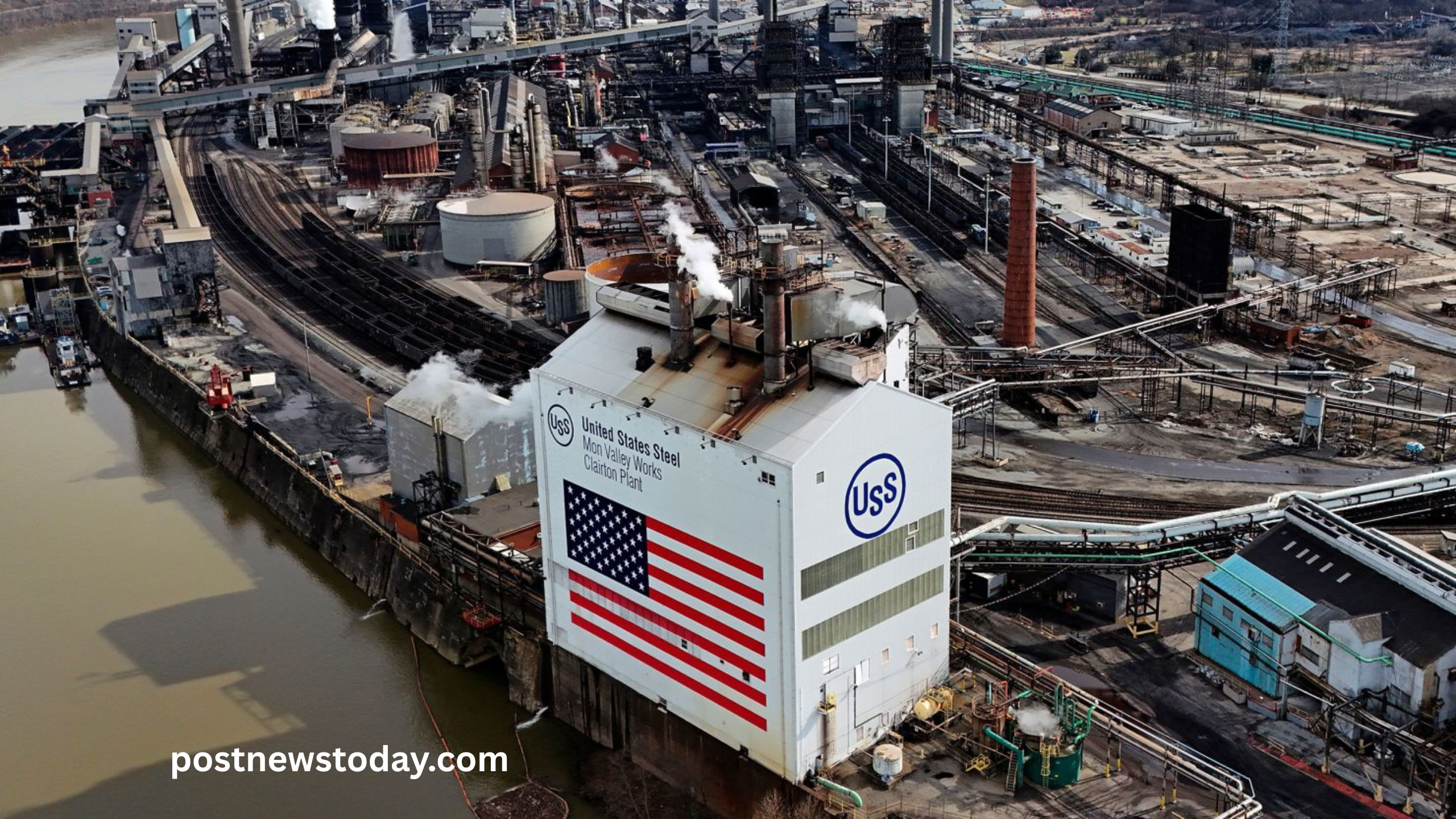
Shares of United States Steel Corporation surged to levels not seen in over a decade following an unexpected announcement by former U.S. President Donald Trump. He publicly endorsed a strategic partnership between U.S. Steel and Nippon Steel, Japan’s largest steelmaker. The endorsement served as a strong signal to markets and ignited optimism among investors, fueling a significant rally in U.S. Steel’s stock.
The news comes at a time when global supply chains remain vulnerable, national security concerns around domestic manufacturing are growing, and international business ties are under close scrutiny. The Trump announcement served as both a political statement and an economic catalyst, creating ripples across global financial markets.
This article explores the context and impact of this landmark announcement. It delves into the history and trajectory of U.S. Steel, the evolving geopolitical and economic climate, the significance of the deal with Nippon Steel, and what this means for American industry and international relations moving forward.
Trump’s Announcement: A Political and Economic Bombshell
In a surprise press event at Mar-a-Lago, former President Trump stood beside executives from Nippon Steel and U.S. Steel. Flanked by American flags and backed by supporters, Trump proclaimed the partnership a turning point in America’s industrial resurgence. Framing the deal as a pro-worker, pro-growth initiative, he emphasized the importance of keeping manufacturing strong and competitive in the face of rising Chinese steel production and global economic uncertainty.
His statement was clear and confident: “This is not just a business deal. This is about protecting American jobs, securing our steel industry, and building a future where America doesn’t depend on anyone for its strength.”
The speech resonated with many of his supporters and brought instant attention to the partnership. Within minutes, news outlets picked up the story, and social media platforms buzzed with speculation and commentary. Wall Street responded almost immediately. U.S. Steel shares began climbing steadily, and by the end of the trading day, they had reached a 14-year high.
Understanding the U.S. Steel and Nippon Deal
While full financial details of the deal remain confidential, what’s known from insider sources paints a picture of a strategic, long-term collaboration rather than a full acquisition or merger. Nippon Steel will make a significant investment in U.S. Steel, focusing on technological upgrades, plant modernization, and expansion into clean steel production.
The partnership reportedly includes:
- Capital investment from Nippon Steel to help U.S. Steel modernize facilities.
- Technology sharing agreements aimed at improving efficiency and sustainability.
- Collaborative research into low-emission steel production.
- Job creation initiatives aimed at expanding U.S. production lines.
- Joint strategic planning to combat global overproduction, especially from Chinese state-backed manufacturers.
The deal marks a blending of East and West manufacturing philosophies. Nippon Steel is renowned for its efficiency, technological prowess, and sustainable practices, while U.S. Steel has long symbolized American industrial power.
Market Reaction and Stock Surge
The markets reacted with near-immediate enthusiasm. Within hours of the announcement, shares of U.S. Steel jumped more than twenty percent, and by the end of the trading week, the stock reached its highest point since the financial crisis. The bullish sentiment was driven by investor confidence that the partnership would inject much-needed capital, innovation, and global expertise into U.S. Steel’s operations.
Analysts noted that investor sentiment was also tied to Trump’s political weight. His influence among conservative business circles and his historic focus on American manufacturing lent the announcement credibility and excitement.
The trading surge was accompanied by increased activity among institutional investors, with several hedge funds reportedly increasing their stakes in anticipation of improved performance and profitability. Retail investors, too, played a role. Platforms such as Reddit and X (formerly Twitter) saw surges in mentions of U.S. Steel, with users expressing both patriotic pride and bullish confidence in the stock’s future.
Historical Context: U.S. Steel’s Rise, Fall, and Rebirth
To understand the full significance of the partnership, it’s essential to look at the history of U.S. Steel. Founded in the early 20th century by industrial giants like J.P. Morgan and Andrew Carnegie, the company quickly became the world’s first billion-dollar corporation. For much of the 20th century, U.S. Steel symbolized America’s industrial might and was a cornerstone of its manufacturing economy.
However, beginning in the late 1970s, the company began to struggle. Foreign competition, rising labor costs, environmental regulations, and aging infrastructure eroded its dominance. The steel industry as a whole suffered from overcapacity and underinvestment, and by the early 2000s, U.S. Steel was a shadow of its former self.
The 2008 financial crisis hit the company hard. It was forced to shutter plants, lay off workers, and restructure debt. Although U.S. Steel made modest recoveries in subsequent years, it remained heavily dependent on political support, including tariffs introduced during Trump’s presidency.
The Trump-Nippon announcement represents not only a business strategy but a potential turning point in U.S. Steel’s long and storied history—a move toward modernization, globalization, and resilience.
Strategic Importance: Why Steel Still Matters
Steel may seem old-fashioned in an era dominated by tech giants and digital innovation, but it remains one of the most critical materials in the global economy. Steel is the backbone of infrastructure, automobiles, appliances, construction, and defense.
In the national security context, steel is considered a strategic resource. In past conflicts, such as World War II and the Cold War, control over steel production was essential for defense preparedness. Even today, the Pentagon includes steel in its strategic materials list.
The Trump-Nippon partnership reflects this ongoing importance. By injecting foreign investment into domestic steel production under a strategic alliance, the United States can maintain control over this critical industry while leveraging innovation from abroad.
The deal also reflects broader trends in industrial policy. As the world moves toward decarbonization and infrastructure upgrades, the demand for advanced, green steel is increasing. The partnership may help U.S. Steel position itself as a leader in environmentally friendly steel production, especially in areas like electric vehicle manufacturing and sustainable construction.
Global Ramifications: U.S., Japan, and the China Factor
One of the underlying drivers of this partnership is the shifting global economic balance, particularly in relation to China. Over the past two decades, China has emerged as the dominant player in the global steel market. Heavily subsidized by its government, Chinese steel companies have flooded the market with low-cost steel, often prompting accusations of dumping and unfair trade practices.
The Trump administration, and now Trump as a private citizen, has been a vocal critic of Chinese economic policies. The Nippon Steel partnership can be seen as part of a broader strategy to create a counterbalance to Chinese influence by deepening U.S.-Japan ties.
Japan is one of America’s closest allies, and its companies have a long track record of investing in the U.S. industrial base. By aligning with Nippon Steel, U.S. Steel not only gains technological expertise but also strengthens geopolitical ties with a trusted partner.
China, unsurprisingly, has responded coolly. While no official statement has been made, Chinese state media has framed the deal as protectionist and potentially destabilizing for global trade. Some analysts worry that the partnership could exacerbate trade tensions or trigger retaliatory tariffs in the future.
Political Reactions and Bipartisan Debate
The Trump-Nippon deal has ignited political debate on Capitol Hill. Republicans have generally welcomed the partnership, echoing Trump’s narrative of revitalizing American industry. Senator Josh Hawley called the deal “a model for how America can collaborate with allies to fight back against Chinese overreach.”
Democrats, however, have voiced more cautious optimism. While many welcome foreign investment that creates American jobs, some progressives are wary of foreign ownership or influence in key sectors. Senator Elizabeth Warren issued a statement urging oversight, stating that “national security must come first, and that means we must ensure that no strategic industry becomes beholden to foreign interests.”
Labor unions are split. Some have applauded the move for its promise of job creation and plant modernization. Others remain skeptical, concerned about potential cost-cutting measures, labor rights issues, or long-term outsourcing.
Still, across party lines, there appears to be growing consensus that the U.S. must act to preserve and enhance its manufacturing base, and strategic partnerships like the one with Nippon Steel may be part of that path forward.
Expert Analysis: Industry Leaders Weigh In
Economists and industry experts have offered a range of perspectives on the deal. Most agree that it represents a unique opportunity for U.S. Steel to modernize and remain competitive in a challenging global landscape.
Dr. Lisa Monroe, an industrial economist at Georgetown University, commented, “This partnership could bring the best of both worlds. U.S. Steel gets access to advanced technologies and investment, while retaining strategic control. If managed well, it’s a textbook example of smart globalization.”
Tom Reinhardt, a veteran of the steel industry, praised the deal’s potential to accelerate green steel production. “We can’t build a sustainable future without sustainable steel. This partnership puts America back in the game,” he said.
However, not everyone is convinced. Some analysts warn that the benefits may be overstated. Others express concern over regulatory hurdles and the risk of the deal being derailed by political opposition or international trade conflicts.
Looking Ahead: The Future of U.S. Steel
The Trump-Nippon announcement may have sent U.S. Steel shares soaring, but the real test lies in execution. Can the two companies translate political goodwill and financial momentum into real industrial transformation?
Key questions going forward include:
- Will the partnership lead to significant domestic job creation, or will automation limit its impact?
- Can U.S. Steel meet environmental targets and become a leader in green steel?
- Will the partnership withstand political scrutiny and potential trade tensions?
- How will rivals such as ArcelorMittal or Baosteel respond?
U.S. Steel’s leadership has expressed optimism. In a post-announcement press release, CEO David Burritt stated, “We are at the dawn of a new era. With Nippon’s partnership and President Trump’s support, we are poised to lead the world in innovative, resilient, and sustainable steel production.”
Only time will tell whether this partnership becomes a catalyst for a true industrial renaissance or just another headline in a volatile economic landscape.
Frequently Asked Questions
What is the Trump-Nippon deal all about?
The Trump-Nippon deal refers to a strategic partnership between U.S. Steel and Japan’s Nippon Steel, announced with the endorsement of former President Donald Trump. It involves investment, technology sharing, and collaborative efforts to modernize and expand steel production in the United States.
Is Nippon Steel buying U.S. Steel?
No, this is not a full acquisition. Nippon Steel is making a significant investment and entering into a strategic partnership, but U.S. Steel remains an independent company with domestic control.
Why did U.S. Steel stock surge after the announcement?
Investor optimism was fueled by the expected financial and technological benefits of the deal, as well as political backing from Donald Trump. The market interpreted this as a sign of revitalization and growth for the American steel industry.
What are the benefits of the partnership?
The partnership is expected to bring capital investment, modernization of aging facilities, expansion of job opportunities, innovation in green steel technologies, and greater competitiveness against foreign producers, especially China.
How does this deal impact American workers?
If executed as planned, the deal could result in job creation, higher wages, and more secure employment in revitalized steel plants across the U.S., especially in manufacturing-heavy states.
Does this deal have national security implications?
Yes. Steel is considered a strategic resource, and the partnership is seen as a way to strengthen domestic steel production, which is vital for defense and infrastructure.
What are the political reactions to this announcement?
Republicans largely support the deal, citing its alignment with pro-manufacturing goals. Some Democrats are cautiously supportive but have raised concerns about foreign influence and worker protections. Labor unions are split.
How does this affect global trade?
The partnership may strain trade relations with China, which has been criticized for steel dumping. It could also influence other nations to form similar strategic alliances to protect domestic industries.
Is this the first time U.S. Steel has partnered with a foreign company?
No, U.S. Steel has previously collaborated with international firms. However, this is one of the most high-profile partnerships, due to the size of Nippon Steel, the involvement of Donald Trump, and the potential long-term economic impact.
What does this mean for the future of U.S. Steel?
The deal positions U.S. Steel for a possible resurgence as a global leader in steel production. It is expected to enhance competitiveness, drive innovation, and potentially mark a turning point in the company’s long history.
Conclusion
The Trump-endorsed partnership between U.S. Steel and Nippon Steel marks a significant milestone in the evolving landscape of American manufacturing. It is not just a business deal—it is a reflection of broader economic trends, shifting geopolitical alliances, and a renewed focus on industrial strength.
