

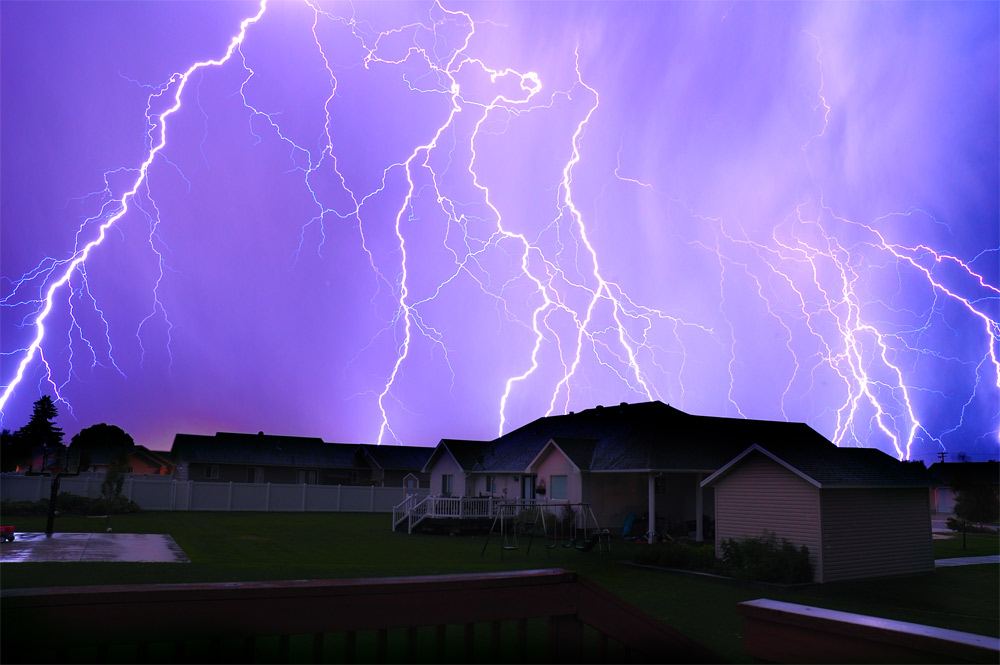
Researchers are learning to predict which lightning strikes are most likely to start wildfires, an advance that could help fire crews reach remote ignitions before they grow out of control. Not every strike starts a fire, since the outcome depends on the strike’s energy, the dryness of vegetation and whether rain follows the storm. By combining lightning detection data with fuel moisture maps, wind forecasts and satellite heat observations, teams can now rank new strikes by risk within hours. Early trials suggest that this approach catches dangerous ignitions that might otherwise smoulder unnoticed for days, especially in forests far from roads and lookouts. The work is becoming more urgent as hotter, drier summers extend fire seasons and increase the number of dry lightning storms. Fire agencies say the goal is not to respond to every strike, which would exhaust resources, but to focus attention on the small fraction most likely to become serious fires. That triage could make a real difference during weeks when dozens of storms pass over a region.
What the Evidence Shows
Turning risk maps into faster action still depends on access, since a high-risk strike in steep or roadless terrain may remain hard to reach. Specialists following lightning-triggered wildfire risk say that drones, lookout cameras and rapid-response crews must be coordinated with the new data, otherwise the warning arrives without a practical response. Researchers are also studying why some strikes ignite immediately while others smoulder in roots and duff for days before flaring up, a delay that complicates forecasting. Climate scientists add that changing storm patterns could shift where dry lightning occurs, moving risk into areas with little recent fire history. Fire managers therefore want models updated regularly with local vegetation and weather data, rather than relying on a single national formula. If those pieces come together, lightning mapping could shift wildfire response from chasing large blazes to stopping small ones early. Reporting and analysis from sources such as NASA track the same developments, and specialists following lightning-triggered wildfire risk say the direction is now consistent across independent lines of evidence.
The Wider Context
Funding bodies are watching lightning-triggered wildfire risk closely because the work sits at the junction of basic curiosity and practical return. Grant panels increasingly ask for a path from discovery to application, while researchers push back that the most valuable uses of fundamental science are rarely the ones written into the original proposal. The tension is productive when both sides stay honest about timescales.
What Happens Next
The long view on lightning-triggered wildfire risk is that fields advance by accumulation rather than by single announcements. This result adds a solid, checkable piece to a structure many teams are building, and its authors have shared their data so the piece can be tested from every side. That is how the picture eventually becomes reliable enough to act on. You can follow related developments in our coverage of science.
It is also worth remembering how quickly the picture in this area has changed before. Positions that looked settled a few years ago have been revised as new data arrived, and the same humility is appropriate now. The strongest coverage of this subject, and the most useful advice, tends to come from sources that update their views openly when the facts move, rather than defending an earlier position long after it has stopped fitting the evidence available.

