

MANCHESTER, England – Manchester United are through to the Europa League final, but their road to the final was far from smooth, and it’s safe to say they didn’t look like a team ready to conquer Europe. Despite a commanding 3-0 advantage from the first leg in Bilbao, United’s performance in the second leg against Athletic Club at Old Trafford raised more questions than it answered.
For much of the match, United appeared to be a team who still needed this competition to salvage their season. After a strong start to the campaign, they had faltered, with inconsistent performances in the Premier League leaving them in a precarious position. The Europa League, with its path to redemption, had become an essential outlet for Erik ten Hag’s men, a way to secure silverware and a place in next season’s Champions League.
The First Leg: A Commanding Advantage
The first leg in Bilbao, which ended 3-0 in favor of Manchester United, seemed to have provided the team with a comfortable cushion. United’s performance in Spain was confident and clinical, with the three away goals leaving Athletic Club with an uphill battle. The tie appeared all but over before the return leg at Old Trafford.
However, anyone familiar with United’s recent struggles would have known not to expect an easy ride in the second leg. This is a team that has, on too many occasions, found ways to make things more difficult than they should be.
A Nervy Start at Old Trafford
As the game at Old Trafford kicked off, the mood in the stadium was cautious, with fans aware of the team’s tendency to make things harder than necessary. United had already faced several frustrating games in the Premier League, struggling to find consistency, and many feared a similar display in this crucial European tie. Although the 3-0 aggregate lead should have made them favorites, there was a palpable sense of uncertainty in the air.
Athletic Club, missing four key players due to injury and suspension, were hardly in an ideal position to mount a comeback. Yet, they were resolute in their approach, determined to make life as uncomfortable as possible for United. For the first 70 minutes, United struggled to break down their opposition, with Athletic Club’s defense staying organized and their midfield pressing high up the pitch.
Mount’s Long-Awaited Moment
As the game wore on, the tension in Old Trafford began to mount. United, despite their lead, were still not playing with the assurance one might expect from a team on the cusp of a major final. Fans grew anxious, and the mood was less celebratory and more expectant. Then, in the 70th minute, a breakthrough arrived.
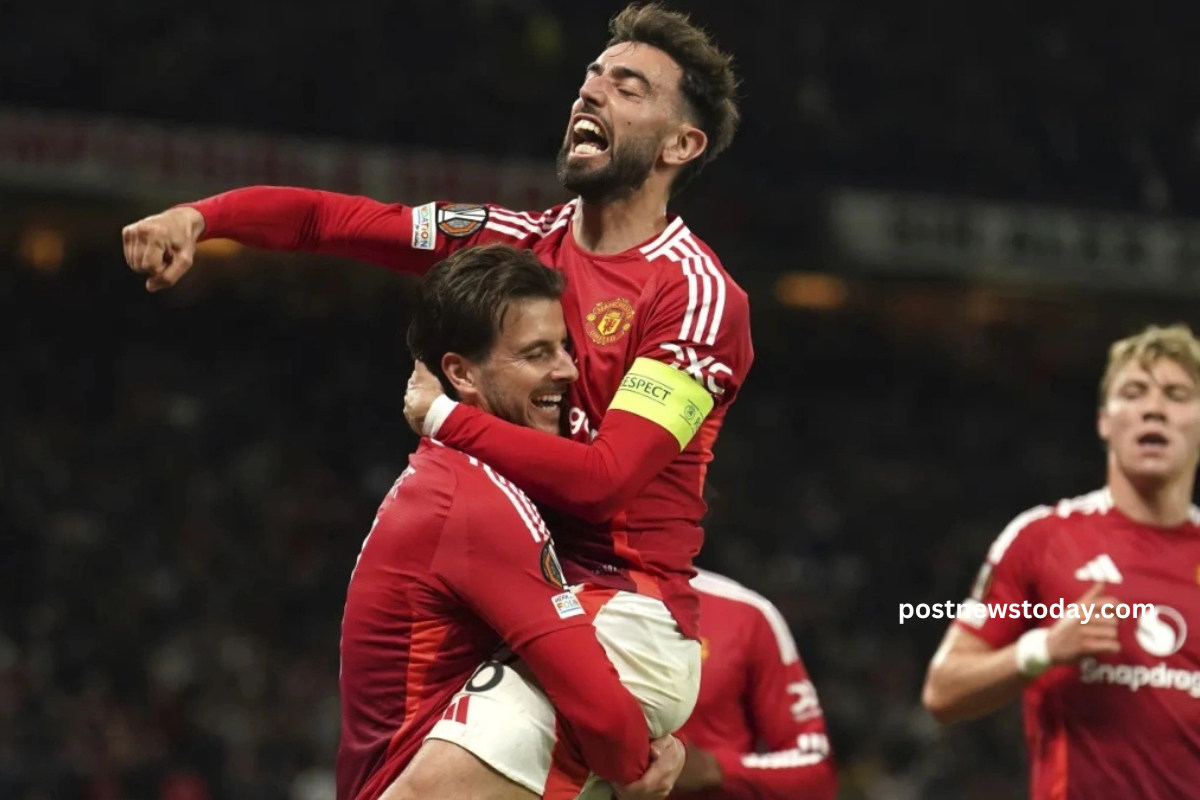
Mason Mount, whose United career had started slowly and had been marred by injury, scored his first goal at Old Trafford in over 18 months. The goal, which came after a well-worked move, was a timely moment of inspiration that lifted the crowd and, perhaps more importantly, lifted the weight off United’s shoulders. It wasn’t just a goal—it was a symbol of United’s resilience, a reminder that they could still deliver when needed most.
However, the relief among the fans was evident—it was more about the pressure being lifted than any sense of euphoria over a commanding performance. Mount’s goal made it 1-1 on the night, and with it, the aggregate score was 4-1. Suddenly, the tie was well and truly over. United had done enough to secure their place in the final, but the nerves that had pervaded the stadium spoke volumes about the fragility of their position.
Late Goals Seal the Deal
Once Mount scored, the floodgates seemed to open. With Athletic Club now needing to score four goals to progress, their resistance began to crumble. Casemiro, who has been one of United’s most dependable performers this season, added a second goal to make it 4-1 on the night, before Rasmus Højlund found the back of the net to make it 5-1.
Mount, in a sign of his growing confidence, rounded off the scoring with his second goal of the night. The aggregate scoreline, which had seemed so precarious just moments before, was now a resounding 7-1 in United’s favor.
The atmosphere at Old Trafford, which had been tense for much of the evening, shifted dramatically. There was no longer any doubt that Manchester United would be heading to the final. Yet, the fact remained that it had been far from a straightforward affair.
Amorim’s Reflection on the Tie
Ruben Amorim, the manager of Athletic Club, was not blind to the challenges his team faced. In his post-match comments, he reflected on the tie, acknowledging the weaknesses in United’s performance while also conceding that they had done enough over two legs to deserve their place in the final.
“It was a good result, but I think if you look at both games it was so much tougher than just the result,” Amorim said. “We have so many weaknesses, and you can see that in the game. But we are fighting, but I think we deserve it if you look at the two games to be in the final. I can see I should be a better manager in this moment, the team should be better in this moment, but we are trying and I think we did quite well in Europe. We struggle a lot in the Premier League.”
His words highlighted the vulnerability of Manchester United. While they had managed to progress to the final, they had done so in a manner that hardly screamed of confidence or control. If anything, Amorim’s comments underscored the fragility of United’s setup—there were glaring weaknesses, and they were exposed on multiple occasions during the two legs.
United’s Vulnerabilities
As much as United had secured their place in the final, their performance over the two legs raised significant concerns. Despite their aggregate victory, there were several areas where they looked far from convincing.
The most obvious issue was the lack of fluidity in their play. United were often too slow in possession and too predictable in their attacking movements. The midfield, which had been touted as a potential strength for the team, struggled to dictate the tempo of the game, especially in the early stages. While the return of Bruno Fernandes was crucial in stabilizing the midfield, United lacked the creativity needed to break down a determined Athletic Club defense until late in the game.
Defensively, United were again prone to lapses in concentration. Although they held on to their lead, Athletic Club’s pressing created moments of panic, and the defense looked shaky at times. This has been a recurring theme throughout the season—United have not been as solid at the back as their fans would have liked, and this tie was no different.
The Road Ahead: What Does This Mean for United?
As United look ahead to the Europa League final, they will face a stern test against a more formidable opponent. Whether it be in the form of Juventus, Sevilla, or Roma, the final will represent a true examination of their capabilities. The performance against Athletic Club, though enough to see them through, was not one that will inspire confidence against the continent’s elite.
United have shown they can win when it matters, but their lack of consistency and fragility in certain areas of the pitch will need to be addressed if they are to lift the Europa League trophy. There’s no denying that the competition remains crucial for the club, not just for silverware but for a spot in next season’s Champions League. With their Premier League hopes all but dashed, the Europa League has become United’s last shot at salvaging their season.
A Final to Look Forward To
While the journey to the final may not have been as smooth as many would have hoped, the fact remains that United are there, and they now have an opportunity to right the wrongs of their inconsistent campaign. The final will offer a chance for redemption, and the players will know that they cannot afford another performance like the one in the second leg against Athletic Club.
For now, United fans will celebrate the fact that they are in a European final. But the hard work is far from over. A final awaits, and it will be up to ten Hag’s men to prove that they are truly ready to take that next step and bring home the Europa League trophy.
Frequently Asked Questions
How did Manchester United qualify for the Europa League final?
Manchester United reached the Europa League final after securing a dominant 3-0 lead in the first leg against Athletic Club in Bilbao. Despite a nervy second leg at Old Trafford, where they were far from convincing, a 1-1 draw on the night (7-1 on aggregate) ensured their progress to the final.
Why was the second leg against Athletic Club difficult for Manchester United?
Despite their commanding lead from the first leg, Manchester United struggled in the second leg against Athletic Club. For 70 minutes, the team lacked fluidity and precision in attack, with Athletic Club putting up a resilient defensive performance. Only after Mason Mount’s goal did United gain some comfort, followed by late goals from Casemiro, Rasmus Højlund, and Mount again to seal their progress.
What did Ruben Amorim, the manager of Athletic Club, say after the match?
Ruben Amorim admitted that while Manchester United deserved to progress, they had shown significant weaknesses throughout the two legs. He acknowledged that United’s performance was much tougher than the final scoreline suggested, and he emphasized that his own team had fought hard, despite missing key players.
What are the key weaknesses in Manchester United’s performance?
Manchester United’s performance in both legs highlighted several vulnerabilities: a lack of fluidity in attack, defensive lapses at crucial moments, and a midfield that struggled to control the tempo. These weaknesses will need to be addressed as they face tougher opponents in the Europa League final.
Who are Manchester United’s potential opponents in the Europa League final?
At the time of writing, Manchester United’s potential opponents in the final could be one of Juventus, Sevilla, or Roma, all of whom are formidable teams in the Europa League. United will need to be at their best to secure victory in the final.
How important is the Europa League for Manchester United this season?
The Europa League is crucial for Manchester United this season, not only as a chance to win silverware but also to secure a place in the Champions League next season. With their Premier League campaign faltering, the Europa League offers United their best opportunity to qualify for Europe’s top competition.
Conclusion
In the end, Manchester United’s journey to the Europa League final has been one filled with mixed emotions. On the surface, the 7-1 aggregate scoreline suggests a dominant performance, but the reality was far different. United’s second-leg display was characterized by nerves, inconsistency, and tactical struggles, which will undoubtedly concern both the players and fans heading into the final.
