

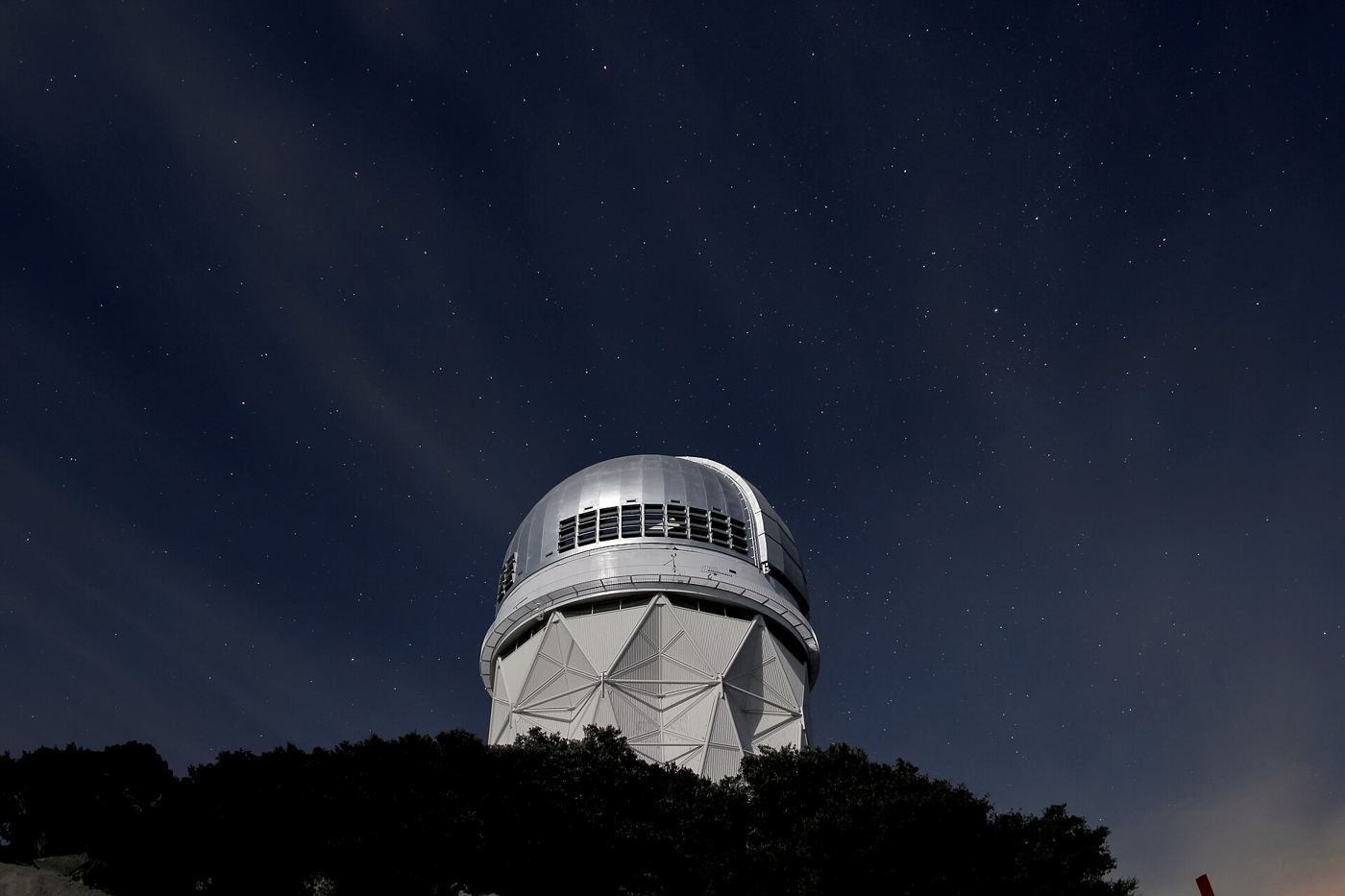
Astronomers are reading the air of distant planets by watching starlight filter through their atmospheres as the worlds cross in front of their stars. During each transit, a tiny fraction of light passes through the planet’s upper layers, picking up the fingerprints of gases it encounters on the way. Splitting that light into a spectrum reveals water vapour, carbon compounds and other molecules, even though the planet itself remains far too faint to photograph directly. Repeated transits are stacked together to pull the fragile signal out of noise from the star and from Earth’s own atmosphere. Space telescopes above the air, and large ground-based instruments below it, are now combining their strengths on the same promising targets. Rocky planets in temperate zones are the ultimate goal, but today’s clearest results come from larger gas giants with extended, easily probed atmospheres. Even those worlds teach researchers how clouds, winds and chemistry behave under conditions unlike anything in our solar system. Each new spectrum tests the models used to interpret fainter signals that may one day come from genuinely Earth-sized planets.
What the Evidence Shows
Interpreting the exoplanet transit readings demands as much care as collecting them. Stars are not uniform lamps: spots and bright patches on their surfaces can imitate or mask the spectral signature of a planet’s air. Teams therefore monitor the star itself, model its blemishes and repeat observations across many transits before claiming a detection. Clouds pose another puzzle, because a grey, featureless spectrum may mean thick haze rather than an absence of interesting gases. Laboratory work helps by measuring how candidate molecules absorb light at the extreme temperatures and pressures found on hot exoplanets. As catalogues grow, patterns are emerging: some worlds show clear skies and strong water features, while others seem permanently veiled. Those differences may reflect formation history, including how much icy material each planet gathered while young. Researchers stress that detecting a gas is not the same as detecting life, and extraordinary claims will require several independent lines of evidence. Still, the technique has moved from heroic experiment to routine tool, steadily turning distant points of light into places with weather, chemistry and character. Reporting and analysis from sources such as NASA track the same developments, and specialists following the exoplanet transit readings say the direction is now consistent across independent lines of evidence.
The Wider Context
Funding bodies are watching the exoplanet transit readings closely because the work sits at the junction of basic curiosity and practical return. Grant panels increasingly ask for a path from discovery to application, while researchers push back that the most valuable uses of fundamental science are rarely the ones written into the original proposal. The tension is productive when both sides stay honest about timescales.
What Happens Next
The long view on the exoplanet transit readings is that fields advance by accumulation rather than by single announcements. This result adds a solid, checkable piece to a structure many teams are building, and its authors have shared their data so the piece can be tested from every side. That is how the picture eventually becomes reliable enough to act on. You can follow related developments in our coverage of science.
It is also worth remembering how quickly the picture in this area has changed before. Positions that looked settled a few years ago have been revised as new data arrived, and the same humility is appropriate now. The strongest coverage of this subject, and the most useful advice, tends to come from sources that update their views openly when the facts move, rather than defending an earlier position long after it has stopped fitting the evidence available.

